Grounded in how we work
Our guides come from real digitisation work in our Norwich lab, on the same equipment, turnaround and pricing as our service, and we refresh them when those change. Spotted an error? Tell us.
Somewhere in most British homes there is a box of VHS tapes and a vague intention to do something about them. The intention has a name now, VHS to digital, and it covers a surprising amount of ground: what the tape becomes, who does the work, what it costs, what the result looks like, and what happens to the cassette afterwards. Most people looking it up want the whole picture before they commit to anything, and that is what this guide is for.
It is written as a map rather than a manual. Each section gives you the honest short answer, and where a question deserves more than a paragraph it points you to the guide that gives it. By the end you should know which of your tapes to do first, which route suits them, and what to expect when the files come back.
What VHS to digital actually means
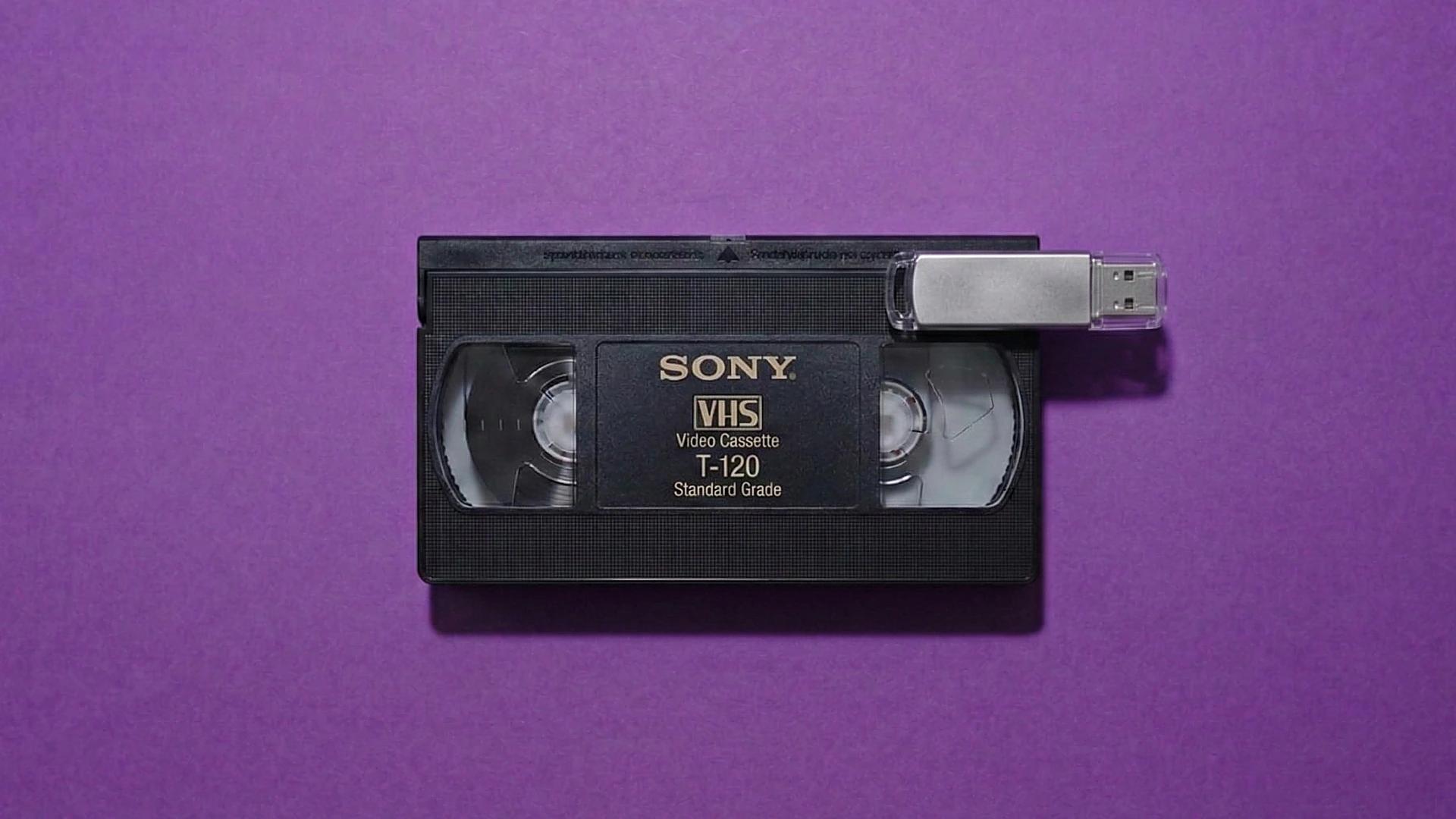
A VHS cassette holds its picture and sound as a magnetic pattern on a strip of tape. The only way to get that recording off the tape is to play it, and a transfer is exactly that: one careful play on a working video recorder, with the output captured as a digital video file instead of being shown on a television. If you would like the format itself explained first, start with what VHS is and how a cassette stores its picture.
The file is the point. A tape can be played in fewer and fewer places every year, and each play wears it a little. A file can be copied without loss, backed up in two places, shared with the family in an afternoon and played on a phone, a television or a computer for as long as files exist. The cassette goes back in its case as the original, with nothing riding on it any more.
The result is usually an MP4, the same kind of file a phone makes when it records video. It is not high definition, because the tape never was, and the section on quality below is honest about that. What it is, done well, is the best version of the recording that still exists.
The three ways to do it
Every VHS to digital route comes down to the same job, playing the tape once and capturing the output, and the differences are about who plays it, on what, and what they do with the file. There are three realistic routes.
Do it yourself. A second-hand video recorder, a capture device, the right leads and a computer with space. It works, it is cheap in money, and it is expensive in time, because every tape plays in real time and the first attempt is usually a weekend. It is also the route where the tape is most at risk, because the deck is an unknown machine and the first thing most people put in it is the tape that matters most. The kit, the steps and the mistakes are set out in how to convert VHS to digital at home.
A high-street counter. Some chemists and photo shops take tapes in store and send them to a partner company for the transfer. It is convenient and familiar, and it means the person you hand the tapes to is not the person who plays them, and the equipment is somewhere else. A fair comparison of the counter, the lab and the kitchen table is in where to get VHS converted in the UK.
A specialist lab by post. The tapes go straight to the place where the work is done, each one is inspected before it is played, the decks are maintained, and the file is the primary output rather than an add-on to a disc. This is the route we offer, and the rest of this guide describes it in enough detail that you can judge it against the others.
One thing all three share: you do not need to own a VCR to get the job done, and if you have been putting the tapes off for that reason, converting VHS without a VCR explains the options.
What it costs
Professional VHS to digital in the UK is priced per tape. At Digital Legacy it is £12 per tape regardless of length, paid upfront when you build a quote on the website, with USB delivery at £10 and cloud delivery at £5 as options. Other services set their own structures, and it is worth checking whether a headline figure is per tape, per hour of footage or per disc, because a three-hour tape costs very different amounts under each.
Doing it yourself costs roughly £150 to £300 in equipment once you have replaced the first deck that turned out not to work, plus the time, which is the number people underestimate. Twenty tapes at two hours each is forty hours of playback before any setup or checking. The full comparison, including what the high-street services tend to charge for, is in what VHS to digital really costs in the UK.
The honest way to read any of those numbers is against the tapes rather than the total. Five replaceable tapes and an interest in the process can make the DIY sums work. Five tapes that are the only footage of someone you have lost make the sums beside the point.
What quality to expect
Set your expectations before the first file comes up on a big screen, because the first reaction is nearly always disappointment. VHS carries around 240 lines of detail and a 4:3 picture that was designed for a small tube television. On a 55-inch panel it looks soft, noisy and a little grey, and no transfer changes that, because the detail was never on the tape.
What a good transfer does is preserve everything that is there without adding faults of its own. The signal from the deck runs through a time base corrector, which holds each line of the picture steady before it is captured, and that is the single biggest difference between a lab transfer and a home one: the wobble and the tearing at the top of the frame largely disappear. A realistic account of what improves and what cannot is in what quality a VHS transfer can reach.
Two things about the tape itself change the result more than any equipment. A recording made in long play packs the picture into tracks half the normal width and always looks worse than a standard-play recording of the same thing, which is explained in how much footage a VHS tape holds and why long play matters. And a tape recorded abroad may be NTSC rather than PAL, which a UK deck may refuse outright; PAL and NTSC tapes explained covers what can be done.
Before you send anything: check the tapes
Every VHS to digital job starts with a box, and the most useful thing you can do before choosing a route is to sort it. Not every tape is the same age, the same condition or the same value, and five minutes with each case changes what you send and how.
Start with how old they are and how they have been kept. Magnetic tape loses signal with age and the binder that holds the coating on breaks down over decades, faster in a loft or a garage than in a bedroom cupboard. A tape from the early nineties is already inside the period where storage decides whether it survives, and the science of that is in how long VHS tapes really last.
Then look through the window of each cassette. The tape should be an even, glossy dark brown. White or grey powder on the tape edge or the reels is mould, and a mouldy tape should not go into any machine, because it spreads spores through the deck and into the next tape. It is recoverable, but by someone with the equipment to clean it first, as our guide to mouldy VHS tapes explains.
A cracked shell, loose or creased tape, or a cassette that has been chewed by a machine are different problems with different answers, and most of them are not the end of the recording. What can and cannot be put right is set out in which kinds of VHS damage can be repaired.
If you are tempted to test a tape in an old deck before sending it, think twice. The tape you cannot replace is the last thing that should go into an untested machine, and if one does jam, what to do when a tape is stuck in the VCR is the calm version of the minute that follows.
For the tapes you decide not to send yet, storing them properly buys time. Upright, rewound, in cases, in a cool and stable room in the main house, and never the loft. The full routine is in how to store VHS tapes so they last.
How the transfer works
With a specialist lab the sequence is the same for every order, and knowing it takes most of the worry out of posting something irreplaceable. You build a quote online, pay at checkout, and receive a reinforced Media Box with a prepaid tracked return label, or use your own packaging and postage if you prefer. We call the whole journey secure tracked 3-way shipping: the box to you, your tapes to us, and the originals back to you with the files.
Packing matters more than people expect. Tapes travel upright in their cases, in a rigid box, padded so they cannot move, and anything you suspect is mouldy or damaged goes in its own bag with a note. The five-minute version is in how to pack tapes for posting.
When the tapes arrive they are logged and inspected before anything is played: the pack is checked through the window, the shell is checked for cracks, and mouldy or shedding tapes are set aside for cleaning. Each tape is then played once on a serviced deck through a time base corrector, captured, checked, and exported as an MP4. Every step, from the parcel arriving to the files going back, is described in how we digitise your tapes.
The work usually takes around 10 to 14 working days from the tapes arriving, and you are told when they arrive, when the transfer is done, and when the parcel is on its way back. If you want to see the sequence from the customer's side, with what each email means, read what happens after you place an order.
What you get back, and how to keep it
You receive one MP4 file per tape, on a USB stick, by cloud download, or both, plus the original cassettes. The choice between USB and cloud is less about quality, which is identical, and more about how you will use the footage: a physical copy to keep at home, or a link the whole family can download from. The trade-offs are in USB or cloud delivery for your VHS files.
People still ask for DVD, and it is worth being clear about why files are the better answer. A disc is a copy at a fixed, standard-definition quality on a format that also ages and needs a player. A file can be copied without loss and turned into a disc later if anyone wants one. The comparison is set out in VHS to DVD, USB or cloud.
Whatever you choose, the file needs the same care the tape never got. Keep at least two copies in two places, one at home and one in the cloud, and give copies to the people in the footage. A digitised collection is one of the few gifts that gets better the more it is shared, which is the thinking behind digitised memories as a present for parents.
Which tapes to do first, and why now
Not every tape deserves the same urgency. The shop-bought films and the recorded-off-the-telly compilations can wait, or go: almost none are worth money, and the honest reality check is in whether any of your VHS tapes are worth selling.
The handwritten ones are the priority. A wedding, a christening, a school play, a grandparent talking to the camera because someone had the sense to press record. Those recordings exist nowhere else, they are on tape that is losing signal every year, and the machines that can play them are getting scarcer and less reliable. The case for acting now rather than at some point is laid out in why VHS is worth converting sooner rather than later.
Once the important tapes are safe as files, the rest of the box is an easier decision. Sell the few with collector interest, donate or recycle the ordinary ones, keep the originals of anything you have digitised if you want them as objects. The five options are ranked in what to do with old video tapes.
If you are ready, the service page for VHS to digital has the quote calculator, the current price per tape and the delivery options, and everything described in this guide happens from there.
The bottom line
VHS to digital is a simple idea with a few decisions inside it. The tape is played once and becomes a file. You can do that yourself, through a shop, or through a specialist lab, and the right choice depends on how many tapes you have and how replaceable they are. It costs about the price of a takeaway per tape professionally, or a weekend and a box of second-hand equipment at home. The result is a faithful, standard-definition copy of a thirty-year-old picture, steadier than the tape ever looked on your old television, and not high definition.
Sort the box, check the tapes, do the handwritten ones first, and keep two copies of everything that comes back. Then put the cassettes on a shelf where they can age in peace, with nothing depending on them.
Frequently Asked Questions
Playing a VHS tape once on a working video recorder and recording the picture and sound as a digital video file, usually an MP4. The tape is untouched afterwards. The file can be copied, backed up, shared and played on a phone, television or computer without a VCR.
At Digital Legacy it is £12 per tape, whatever the tape's length, paid upfront when you build a quote. USB delivery is £10 and cloud delivery £5 as options. Doing it yourself costs roughly £150 to £300 in equipment plus the running time of every tape in real time, and high-street services set their own prices per tape or per disc.
The capture itself takes as long as the tape runs, because a VHS tape can only be played in real time. At our lab the whole job, from your tapes arriving to the files going back, usually takes around 10 to 14 working days, which includes inspection, cleaning where needed, capture and quality checks.
No, and anyone who promises that is overselling. VHS holds about 240 lines of detail and a transfer preserves what is there rather than adding to it. A good transfer looks steadier and cleaner than the tape did on your old television, because the signal is stabilised before capture, but it is still a standard-definition picture.
Not at home, because the tape has to be played by something. Your choices are to buy or borrow a working deck, or to have the tape played once by a transfer service. There is no cable or gadget that reads a cassette directly.
Keep the ones that matter as the originals, stored upright in a cool, dry room, and keep at least two copies of every file in two places. The tapes that are only shop-bought films can usually be sold as a job lot, donated where a charity shop will still take them, or recycled through a specialist scheme.