
Grounded in how we work
Our guides come from real digitisation work in our Norwich lab, on the same equipment, turnaround and pricing as our service, and we refresh them when those change. Spotted an error? Tell us.
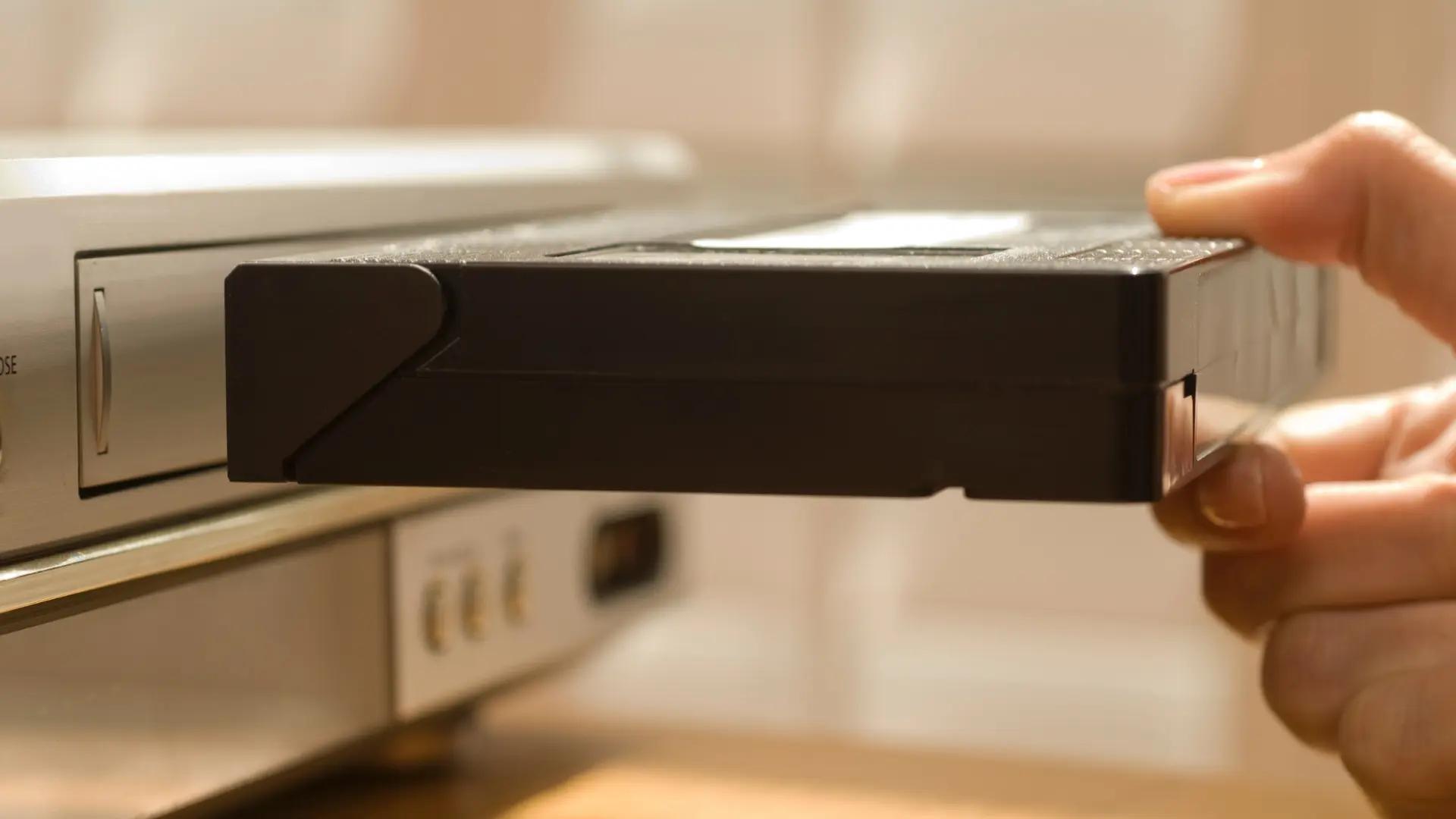
There is something instantly familiar about a VHS tape. The weight of the cassette in your hand, the handwritten spine label, the soft mechanical clunk as it slides into a recorder: for many families, VHS is the format that captured birthdays, weddings, school plays, first steps, and ordinary weekends that now feel priceless. If you are asking what is VHS, or wondering whether those old cassettes in the loft are still watchable, you are not alone.
This guide explains the VHS meaning, the history of the VHS format, and how VHS works in simple terms. It also covers the different VHS variants, why VCRs disappeared, and what to do if you still have a box of tapes today. Most importantly, it explains why now is the right time to think about VHS to digital conversion before age, mould, and magnetic decay take more of the picture away.
VHS Meaning: What Does VHS Stand For?
VHS stands for Video Home System. It was developed by JVC and launched in Japan in 1976, before reaching the UK in 1978. It was designed to bring television recording and home video playback into ordinary households, and it did exactly that.
By the 1980s and 1990s, VHS had become the standard format for home entertainment in Britain. Families used it to record television programmes, rent films from the video shop, and preserve home movies for later. Although Betamax is often remembered as the technically sharper rival, VHS won because it was more widely licensed, more affordable, and supported by more manufacturers. In practical terms, that meant more machines in more homes, cheaper tapes, and greater availability on the high street.
For an entire generation, VHS was not just a video format. It was the format.
The History of VHS: How It Took Over Home Video
When VHS arrived in the UK, it entered a market that was ready for convenient home recording. For the first time, people could record a programme and watch it later, or play back family footage without booking a cinema projector or specialist equipment.
VHS quickly overtook rival formats because it was easy to adopt at scale. Manufacturers could produce compatible recorders, rental shops could stock the same type of cassette, and consumers knew that a tape bought or hired in one place would usually play on a machine bought somewhere else. That compatibility mattered.
By the mid-1980s, VHS had firmly won the so-called format war. It became the standard for both pre-recorded films and home recordings. Through the 1990s, it remained dominant, even as newer formats began to appear. Eventually DVD made VHS look bulky, soft, and inconvenient by comparison, but for years VHS was the centre of home viewing in Britain.
How Does VHS Work?
If you have ever wanted a simple VHS tape explained without too much jargon, the short answer is this: VHS stores picture and sound as magnetic information on tape. Sound sits on its own tracks, which is why a tape can sometimes play a picture with no sound.
Inside every VHS cassette is a strip of tape roughly 12.7 mm wide. That tape is made from a polyester base coated with magnetic particles. When you record, the video recorder turns the incoming picture and sound into electrical signals and writes them onto the tape magnetically. When you play the tape back, the machine reads those magnetic patterns and turns them back into moving pictures and sound.
What makes VHS clever is the way it records. Rather than writing long straight lines from one end of the tape to the other, the recorder pulls the tape from the cassette shell and wraps it around a rapidly spinning drum. Tiny heads on that drum record diagonal tracks across the tape while the tape itself moves past slowly. This method allowed VHS to store video efficiently using relatively slow tape movement, which helped keep cassette sizes practical for home use.
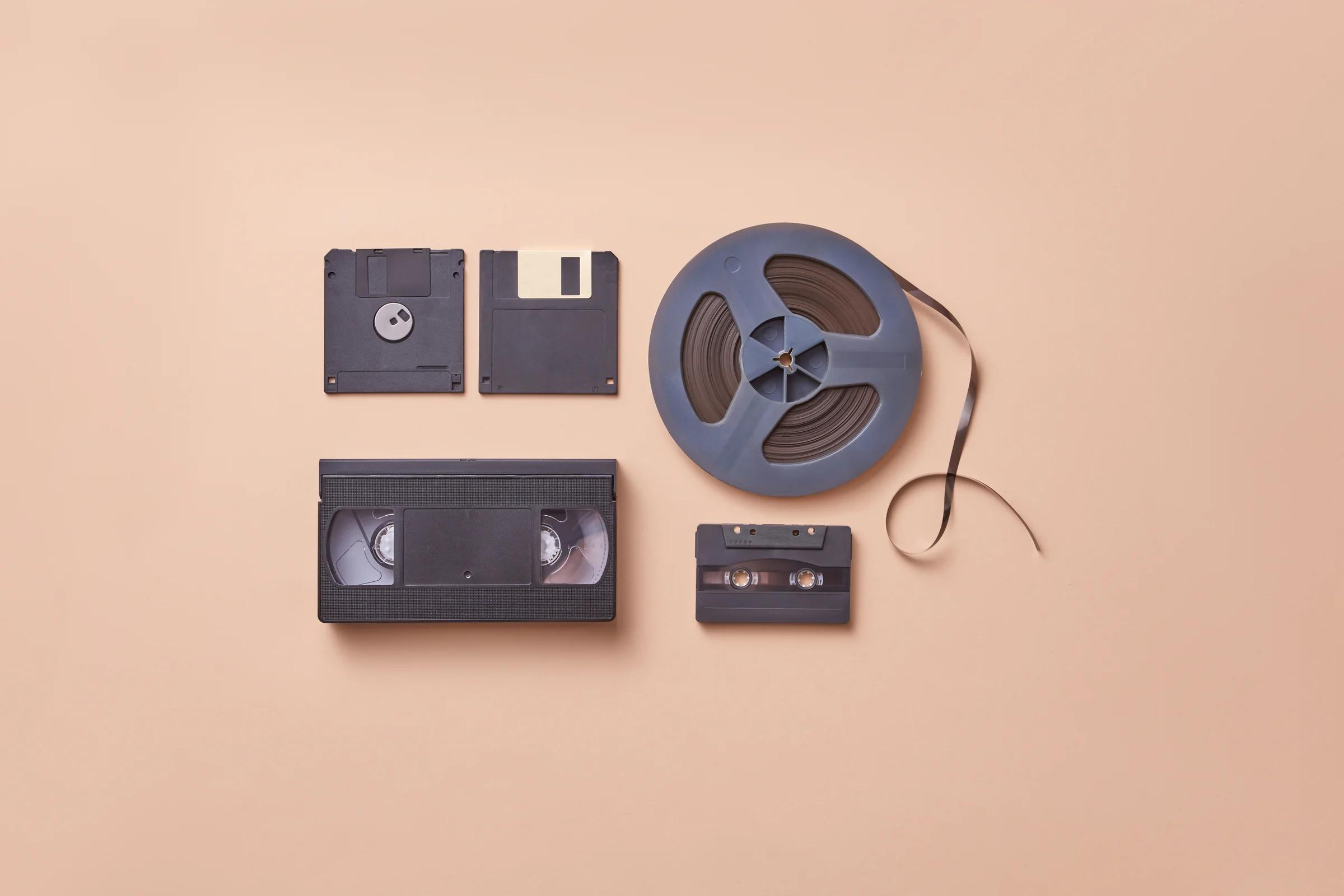
A standard VHS cassette shell measures about 187 mm × 103 mm × 25 mm. In UK PAL standard play, a typical E-180 tape holds up to three hours of footage. In long play, that can stretch to six hours, although the picture becomes softer and more prone to playback problems. This is worth noting because many family tapes were recorded in long play to save space, and those recordings can be more difficult to recover cleanly today.
Why VHS Picture Quality Looks the Way It Does
Part of understanding the VHS format is understanding its limits. VHS was designed for convenience and affordability, not pristine image quality. Standard VHS offers comparatively low resolution by modern standards, with visible noise, colour bleed, soft detail, and occasional tracking issues. Yet that softness is also part of how people remember it. VHS has a look as much as a specification. There is a realistic account of what quality a VHS transfer can reach.
Home recordings are often further affected by the condition of the original camcorder, the quality of the VCR used for playback, and the way the tape has been stored over the years. A tape kept in a dry cupboard will usually fare far better than one left in a cold garage or damp loft. Tapes recorded abroad add another wrinkle, covered in PAL versus NTSC VHS.
This is one reason cheap do-it-yourself transfer methods so often disappoint. Low-cost USB capture cards may seem convenient, but they frequently introduce dropped frames, unstable playback, and audio-sync problems. If the tape itself is already fragile or slightly warped, poor capture hardware can make the result look worse than it needs to. We have compared the real cost of DIY and professional VHS transfer.
Professional transfer is different. A well-maintained deck, paired with proper signal processing and a Time Base Corrector, can stabilise wobbly footage, reduce image jitter, and capture the most faithful version of what still remains on the tape. You can read every step of our transfer process.
VHS Formats and Variants Explained
When most people say VHS, they mean the full-size cassette used in a home video recorder. However, several related formats appeared over the years.
Standard VHS
This is the familiar full-size cassette found in most British homes. It was used for pre-recorded films, television recordings, and dubbed home footage. If your tapes were recorded on a home VCR, they are likely standard VHS.
VHS-C
VHS-C stands for VHS Compact. It uses the same basic recording system as standard VHS, but in a much smaller cassette designed for camcorders. VHS-C tapes can often be played in a standard VHS recorder using a proper adapter shell, although the tape inside is still delicate and should be handled carefully. There is a separate guide to what VHS-C is and how to identify it.
This matters because many families confuse VHS-C with full-size VHS when they first uncover a box of old media. They are related, but they are not physically interchangeable without the correct adapter and a functioning machine. Old adapters are a frequent point of failure, so it is worth knowing what to do when a VHS-C adapter stops working.
S-VHS
S-VHS, or Super VHS, was an upgraded version of the format designed to deliver noticeably better detail than standard VHS. It never became the mainstream household standard in the UK, but it did appeal to enthusiasts and some semi-professional users. If you have S-VHS tapes, they should ideally be transferred on suitable equipment rather than an ordinary consumer deck.
D-VHS
D-VHS was a later digital format that used VHS-style cassettes, but it arrived far too late to reshape the market. By then, DVD and hard-drive recording had changed expectations, and D-VHS remained niche.
Why VHS Beat Betamax
No article on what is VHS feels complete without this question. Betamax is often remembered fondly because of its picture quality, but technical quality alone does not decide a format war.
VHS succeeded because it was more widely licensed, more widely manufactured, and easier to build a market around. More brands produced VHS machines, which lowered prices and increased choice. More people bought those machines, so more publishers released content on VHS. Video rental shops followed demand, and the cycle reinforced itself.
In other words, VHS won because it became the most convenient standard for ordinary people. The longer story is in our guide to the VHS versus Betamax format war.
Why Old VHS Tapes Deteriorate Over Time
This is where nostalgia meets reality. VHS tapes do not last forever.
Like all magnetic media, VHS relies on a physical coating that changes with age. Over time, tapes can suffer from magnetic decay, binder deterioration, loss of signal strength, edge damage, and stretching. Some may develop mould if they have been stored in damp conditions. Others may begin to shed oxide or play noisily after years of neglect.
It is also worth mentioning sticky shed syndrome, although this is more strongly associated with certain professional and broadcast tape stocks than with most domestic VHS cassettes. Even so, ageing tape materials can still become tacky, unstable, or difficult to transport through a machine safely. In practical terms, an old cassette may squeal, drag, shed debris, or jam inside the recorder. There is more on the real lifespan of a VHS tape and the signs of decay to watch for.
This is why old tapes should not simply be pushed into the first second-hand VCR you can find online. A poorly maintained machine can crease, chew, or snap a fragile cassette within seconds. If the recording is your only copy of a wedding, christening, or childhood home movie, that is a terrible risk to take. If a tape has already been damaged, here is which kinds of VHS damage can be repaired.
Why VCRs Disappeared
VCRs vanished for the same reason VHS did: newer formats were easier, cleaner, and better suited to modern habits.
DVD offered sharper picture quality, instant chapter access, no rewinding, and a smaller, tidier format. Later came hard-drive recorders, streaming, and cloud-based media libraries. By the mid-2000s, VHS had become inconvenient compared with digital alternatives. Rental shops moved on, retailers reduced shelf space, and manufacturers stopped investing in recorder production. Which of those alternatives a family should choose today is covered in VHS to DVD, USB or cloud.
The result is the situation many families face now: the tapes still exist, but the machines to watch them are increasingly scarce, unreliable, or expensive to service. Even if you find a deck, there is no guarantee it will play your tapes properly. If you do want one, there is a guide to where UK buyers still find working VCRs and what to check first.
That is why so many people searching for convert VHS to digital, transfer VHS to digital, or convert VHS tapes to digital are doing so now. The need is no longer theoretical. It is practical and urgent. We set out the case for converting VHS now rather than later.
What Should You Do with a Box of VHS Tapes Today?
If you have a box of tapes in the cupboard, there are really three options: digitise them, keep them, or recycle them. The right choice depends on what is recorded on them. There is a longer look at what to do with old video tapes, including selling and donating.
If you simply want to see what is on them first, that is a fair place to start, though it does need a working VCR and a way of connecting it to a modern television. There is a full guide to how to play VHS tapes if that is the stage you are at.
1. Digitise Anything That Matters
If the tapes contain home movies, family events, school performances, holidays, or recordings of loved ones who are no longer here, the best option is to convert VHS to digital while the tapes are still playable. You do not need a VCR of your own to do this, as explained in converting VHS without a VCR.
Professional VHS video to digital transfer captures the content in a format you can actually use today. Once digitised, your recordings can be watched on a computer, television, tablet, or phone, and backed up in more than one place. That means your memories are no longer dependent on a single ageing cassette and a vanishing playback machine. How you receive the files, on a USB drive or by cloud download, is your choice.
Just as importantly, professional handling reduces risk. At Digital Legacy, the goal is not simply to get a file off the tape, but to preserve the best possible version of what remains, using proper playback equipment and stabilisation tools rather than bargain consumer adapters. There is a step-by-step account of what happens after you place an order.
2. Keep Tapes Only If They Are Stored Properly
If you are not ready to digitise immediately, store the tapes upright in a cool, dry, stable environment away from radiators, direct sunlight, loft heat, and damp. Avoid garages and sheds if possible. Do not stack tapes carelessly, and do not leave them near sources of mould or condensation.
That said, storage is only a delaying tactic. It slows decline, but it does not stop it. The right room, shelf and case are covered in how to store VHS tapes properly.
3. Recycle Unwanted Pre-recorded Tapes Responsibly
If your tapes are mainly shop-bought films or television recordings you no longer need, they may have little practical value now that the same content is widely available elsewhere in better quality. These tapes should not simply be thrown into general waste if a better option is available. VHS cassettes contain mixed materials, so recycling can be more complex than ordinary household plastics. Check local guidance or specialist media recycling options in your area. Before anything goes to recycling, it is worth a quick look at whether any of the tapes are worth money.
The Safest Way to Send VHS Tapes for Digitisation
Many people hesitate at this point because the tapes are precious. That is completely understandable. When a cassette holds your only footage of a grandparent’s voice or your children on Christmas morning, trust matters as much as technology.
If you decide to transfer VHS to digital, pack the tapes carefully in bubble wrap inside a sturdy box so they cannot shift around in transit. Include clear labelling where possible, especially if any tapes are damaged, mould-affected, or unusually important. For valuable and irreplaceable items, use a tracked service such as Royal Mail Special Delivery or a secure courier, so the parcel is insured and traceable from door to door. There is also a short guide to how to pack tapes for posting.
That extra peace of mind matters when you are sending memories that cannot be replaced. The whole journey from cupboard to file is mapped in our complete guide to VHS to digital.
Final Thoughts: VHS Still Matters Because the Moments on It Still Matter
VHS may be obsolete as a format, but the recordings on those tapes are not obsolete at all. They are often the only surviving record of family life at a particular time and place: voices, faces, rooms, and small details no phone camera ever captured because phones did not exist yet.
So if you have been wondering what is VHS, the answer is simple. It is an ageing analogue video format that once defined home entertainment. But if you have been wondering what VHS means to your family, the answer is much more personal. It may mean the only footage you have left.
If your tapes still matter to you, now is the time to act. Get an instant quote on the VHS digitisation service page at digital-legacy.me, pay upfront at checkout, then send your tapes using the secure tracked shipping included with your order, and preserve those recordings before time takes more of them away.
Frequently Asked Questions
VHS stands for Video Home System. It was named by its developer, the Japan Victor Company (JVC), to emphasise that it was designed for home use rather than professional broadcast.
The last VCR was manufactured by Funai Corporation in July 2016. No new VCR machines have been produced since.