Grounded in how we work
Our guides come from real digitisation work in our Norwich lab, on the same equipment, turnaround and pricing as our service, and we refresh them when those change. Spotted an error? Tell us.
Most VHS tapes in Britain are not stored so much as put somewhere. A carrier bag in the loft, a stack on top of the wardrobe, a cardboard box in the garage behind the lawnmower. The tapes were cheap, the machines were everywhere, and nobody was thinking about 2026 when they pushed a box of them out of sight in 1998. The trouble is that the places tapes get put are, almost without exception, the places that shorten their lives fastest.
This guide is about doing it properly, and it is deliberately practical. What damages a tape, which rooms in the house are safe and which are not, how to pack a shelf, what to do with a tape that already smells wrong, and how to check a collection without playing anything. It ends with the honest point that good storage slows decay rather than stopping it, and what that means for the tapes you cannot replace.
What actually damages a VHS tape
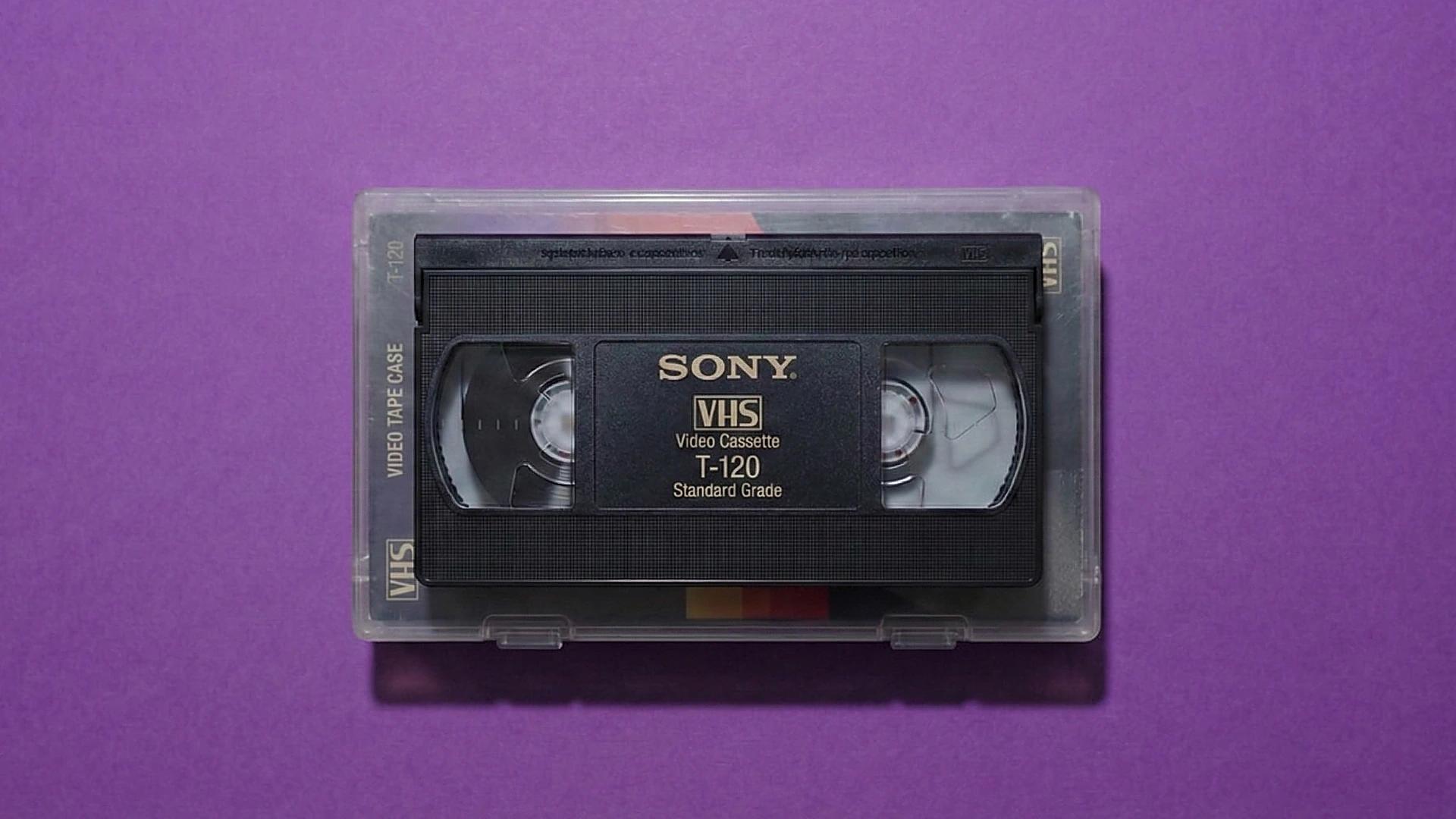
A VHS cassette holds around 250 metres of thin polyester tape coated with magnetic particles held on by a binder, wound onto two reels inside a plastic shell. Everything that goes wrong in storage attacks one of those parts: the coating, the binder, the base, the wind, or the shell. The format itself is described in our plain guide to how VHS works, and it helps to have that picture in mind, because storage is really about protecting a very long, very thin strip of plastic from its own environment.
Heat speeds up every chemical process inside the cassette. The binder softens and ages faster, the base can stretch, and a tape left in a hot car or a summer loft can distort so that it never tracks properly again.
Humidity is the more dangerous of the two. Damp air lets the binder absorb moisture and break down, which is what eventually makes a tape squeal and shed its coating, and it is what mould needs to grow. Swings between damp and dry are worse than either extreme held steady, because the tape expands and contracts with each cycle.
Dust and dirt get inside the shell through the flap and the hub holes, settle on the tape, and are dragged across the heads of whatever machine plays it next. A dusty tape also marks the tapes played after it.
Magnetic fields are a smaller risk than people fear, but a real one. Loudspeakers, some older telephones and motors, and anything with a strong magnet inside can weaken the recording on a tape left touching them for a long time.
Gravity and tension work slowly. A tape stored flat carries the weight of its own pack on one edge for years. A tape left half wound has its recorded section exposed and under uneven tension. Neither ruins a tape overnight; both make it more likely to misfeed or damage itself when it is finally played.
The full story of how those forces add up over decades is in how long VHS tapes really last. The short version is that a tape from the nineties is already inside the period where storage decides whether it survives.
The right room, and the wrong ones
Archival guidance for magnetic tape generally recommends a cool, stable environment, somewhere around 15 to 20 degrees Celsius with relative humidity in the region of 30 to 50 percent, and above all no large swings in either. You do not need a climate-controlled store to get close to that. You need an ordinary room in the main body of the house that stays roughly the same temperature all year.
The good places are unglamorous. A bedroom cupboard, a hallway cupboard, the bottom of a wardrobe, a bookshelf in a room that is lived in, or a lidded box under a bed. Interior walls are better than exterior ones, because they do not get cold and damp in winter. Away from radiators, direct sunlight, the airing cupboard and anything with a motor in it.
The bad places are the ones tapes actually end up in:
- The loft. Freezing in January, baking in July, damp when the roof breathes and dusty all year. It is the single most common place for a family's tapes to be, and the single worst.
- The garage and the shed. Unheated, often damp, and shared with petrol fumes, tools and the occasional mouse. Cardboard boxes there wick moisture straight up from the floor.
- The conservatory and the windowsill. Sun through glass cooks a cassette shell and fades the label, and the temperature swings every day.
- The bathroom and the kitchen. The two dampest rooms in the house, with steam and grease in the air.
- Next to the television or hi-fi. Warm, and close to loudspeaker magnets.
If your tapes are currently in one of those places, the most useful thing in this whole guide is simply to bring them indoors. Let them come up to room temperature slowly, in their box, over a day or two, before you handle them, so that condensation does not form inside the shells.
Upright, rewound and in a case
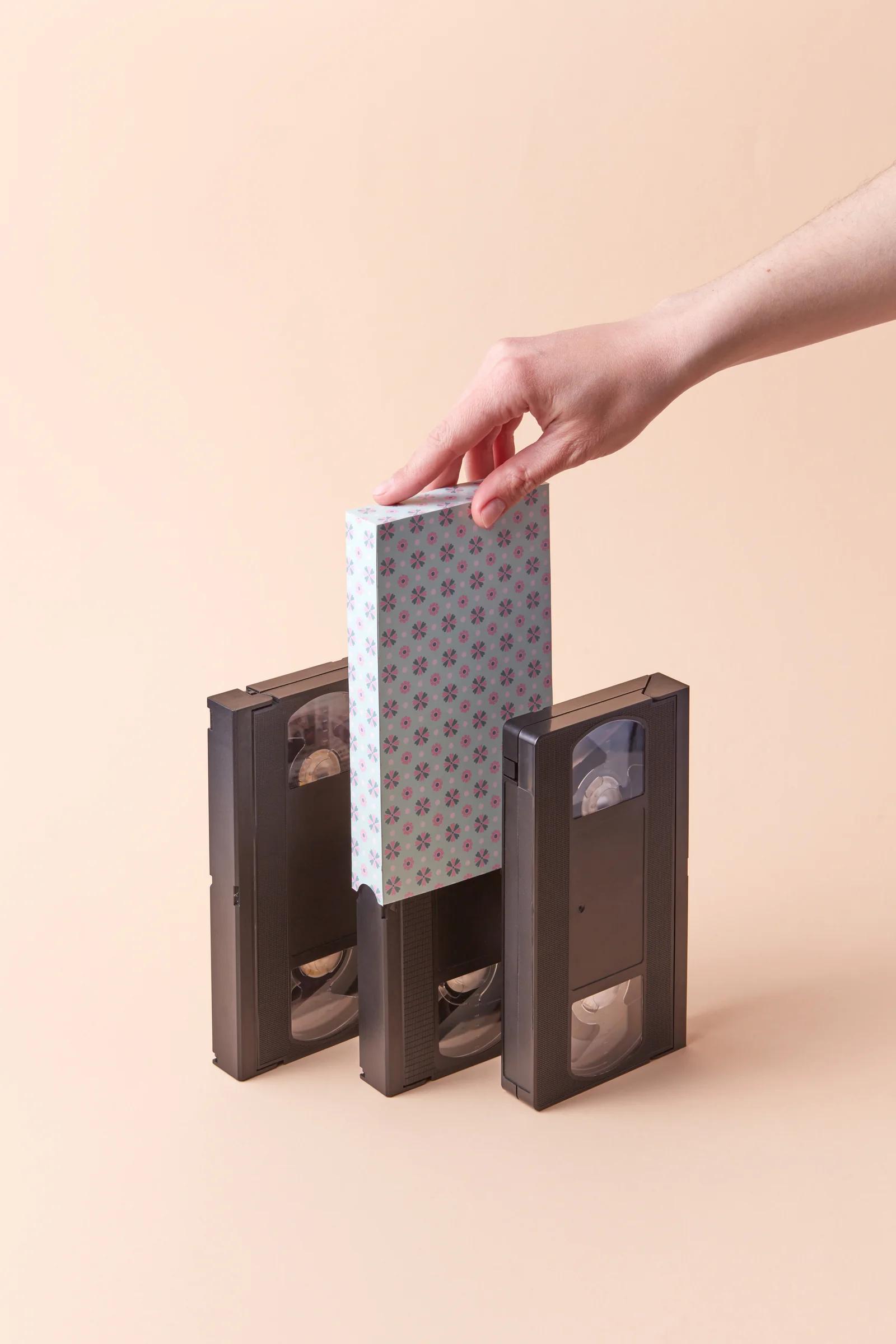
Once the room is right, the shelf is easy. Store tapes standing on their long edge like books, with the spine facing out so you can read the label. Standing upright keeps the tape pack sitting evenly on the hub instead of leaning on one edge, and it stops the weight of a stack crushing the cases at the bottom.
Wind every tape fully to the beginning or the end before it goes away. A tape stopped halfway through has its recording sitting exposed across the pack under uneven tension, and it is the section you most want to keep. If a tape has not been played for years, do not run it through a machine just to rewind it; the extra pass through a second-hand deck is a bigger risk than leaving it as it is.
Keep every cassette in a case. The original library case, a cardboard sleeve or a plain plastic case all do the job, which is to keep dust out of the flap and light off the tape. Cases with the hinged plastic clamshell design are the best of the common ones because they close fully. Tapes without a case can be stored in a lidded box, packed snugly enough that they cannot fall over but not so tightly that the shells press on each other.
Leave a little air. A shelf packed solid traps moisture between the cases. A box packed solid does the same. Tapes do not need to breathe, but the space around them does.
Labels, boxes and knowing what you have
A tape you cannot identify is a tape you cannot prioritise, and prioritising is the whole game with a collection that is ageing. Label the spine, not the flap, in pencil or a soft marker, with what is on it and the year if you know it. Do not stick anything over the hub holes or the flap, and do not write on the tape reels through the window.
Keep a list. A sheet of paper in the box or a note on your phone, listing each tape and roughly what it holds, saves you from opening every case when you finally decide which ones matter. It also stops the family argument about whether the wedding was on the tape marked Wedding or the one marked Do Not Record Over.
For the box itself, use plastic rather than cardboard if the tapes will be anywhere with a hint of damp. Cardboard is fine in a dry cupboard and is what most tapes have lived in for thirty years, but it draws in moisture, and a cardboard box on a concrete floor is a wick.
Check the collection once a year
You do not need to play a tape to check it, and on an old tape you are better off not doing so. Once a year, take each case off the shelf and do three things.
- Smell it. A faint plastic smell is normal. A musty or vinegary smell is not, and it means moisture has got in and the tape needs looking at more closely.
- Look through the window. Slide the flap up gently. The tape should be an even, dark, glossy brown. White or grey powder or fuzz on the tape edge or the reels is mould. A wavy, stepped or cone-shaped pack means the tape has been stored under uneven tension.
- Look at the shell. Cracks, a flap that will not close, warping or a hub that rattles all point to a tape that should not go into a machine without attention.
A tape with white powder on it should be moved away from the others straight away, in its own bag, because mould spreads from cassette to cassette on the shelf and through any machine that plays it. Do not wipe it, do not try to play it and do not put it back with the collection. The treatment and what can be recovered are covered in our guide to mouldy VHS tapes.
A tape with a cracked shell or loose tape inside is a different problem with a different answer, and there is a guide to which kinds of VHS damage can and cannot be put right. The important thing in both cases is the same: the tape has told you it is in trouble, and the next thing that happens to it should be a decision rather than a play button.
What good storage cannot do
Here is the honest part. Every piece of advice above slows the decline of a tape. None of it stops the decline. The magnetic signal on a VHS tape weakens with age whatever you do. The binder that holds the coating on breaks down over decades even in a good cupboard, only more slowly than in a bad loft. And the machines that can play the tapes are getting rarer and less reliable every year, which is a storage problem of a different kind, one that a clean shelf cannot solve.
That is why the right way to think about storage is as a way of buying time. A well-kept tape gives you years to decide what to do. A badly kept one may not give you another winter. The argument for using that time, rather than banking it, is set out in why VHS is worth converting sooner rather than later.
For the tapes that hold home recordings, the sensible end point is a single careful play on maintained equipment and a file you can copy, back up and share. After that, the cassette can go back on the shelf as the original, and the recording no longer depends on it. What happens in that process, from inspection to the files coming back, is described step by step in how we digitise a tape.
If you are ready to do that for the tapes that matter, our VHS to digital transfer service takes them by secure tracked 3-way shipping, plays each one once on serviced decks and returns MP4 files with the originals. The tapes you decide to keep as tapes can then be stored exactly as this guide describes, with much less riding on the shelf.
The bottom line
Bring the tapes out of the loft, the garage and the conservatory into a cool, stable room in the main house. Stand them upright in cases, fully rewound, with a little air around them and a label on every spine. Check the shelf once a year by smell and by looking through the window, and separate anything with white powder on it immediately.
Do all of that and a tape will last a great deal longer than one left in a carrier bag under the eaves. Then use the time it gives you. Storage keeps a tape; it does not keep the recording. Getting the recording off the tape is the only step that does. That step is explained from start to finish in the complete VHS to digital guide.
Frequently Asked Questions
It is the worst place in the house for them. A loft swings from freezing to well over thirty degrees across the year, holds moisture in winter and dust all year round, and that cycle is exactly what breaks down the binder holding the recording onto the tape and encourages mould. Bring tapes down into the main living space, even if it is only to a box under a bed.
Upright, like books on a shelf, with the full reel at the bottom. Stored flat, the weight of the tape pack sits on one edge of the tape for years and can warp it, and stacks of flat tapes press the lower cases out of shape. Upright storage keeps the pack sitting evenly on the hub.
Yes. A tape left halfway through sits under uneven tension with the recording exposed across the pack. Wind it fully to the start or the end so the tape is packed evenly on one reel, then put it away. If a tape has not been played in years, do not put it in a machine just to rewind it; leave it as it is and let a transfer service handle it.
A cool, stable room. Archival guidance generally recommends somewhere around 15 to 20 degrees Celsius with relative humidity in the region of 30 to 50 percent, and above all no big swings. An ordinary bedroom or hallway cupboard away from an outside wall is usually close enough. Bathrooms, kitchens, garages, sheds and conservatories are not.
No. It slows the decline, sometimes a great deal, but the magnetic signal on a tape still weakens with age and the binder still breaks down over time. Storage is a way of buying time to get the recordings copied off the tape. It is not a substitute for doing so.