
Grounded in how we work
Our guides come from real digitisation work in our Norwich lab, on the same equipment, turnaround and pricing as our service, and we refresh them when those change. Spotted an error? Tell us.
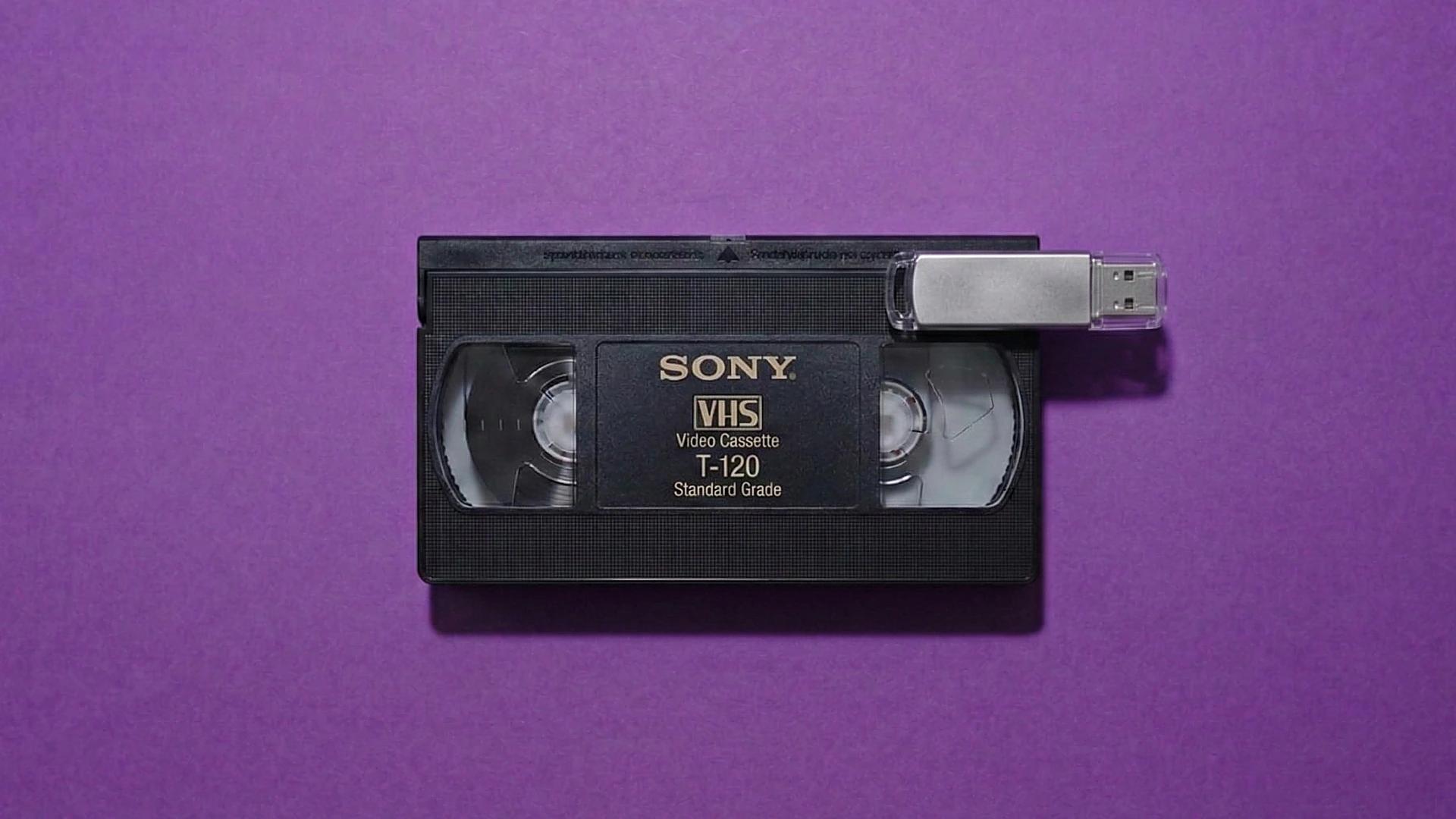
Once you decide to convert VHS to digital, most of the hard part is emotional. You have found the tapes, chosen to preserve them, and trusted someone with recordings that may be your only copy of a wedding, a childhood Christmas, or a grandparent’s voice. But after the transfer itself, there is one final decision to make: should the finished files come back on a USB drive, by cloud download, or both?
It sounds like a small technical detail, but it matters more than people expect. The way you receive your files affects how quickly you can watch them, how easily you can share them, and how safely you can back them up for the future. This is why choosing between VHS to USB and VHS to cloud is not really about quality. It is about convenience, confidence, and how you want to live with those memories once they have been digitised.
Both options deliver the same files
The first thing to make clear is that the transfer itself does not change. Whether you choose USB, cloud, or both, the underlying work is the same. Your tapes are still digitised into MP4 files, and the conversion quality is identical. If you want the background on the format you are leaving behind, see what VHS is and why the tapes age.
That is important because some customers worry that one option might be “higher quality” than the other. It is not. This is not a choice between good and better. It is a choice between two delivery methods for the same digitised footage. What that footage will look like is covered in the realistic quality of a VHS transfer.
USB drive: the physical backup people understand straight away
For many people, USB is the easiest option to trust because it feels tangible. A tape used to be a physical object you could hold, label, and store. A USB drive keeps some of that reassuring familiarity. It arrives through the post, sits in your hand, and can be kept in a drawer, memory box, or filing cabinet just as you might once have kept the original tapes.
That practicality matters. A USB drive can be plugged directly into many laptops, computers, and smart televisions without needing any internet connection. If you want to sit down in the living room and watch old family footage on the television, a USB drive often feels like the most direct and least fiddly route.
There is also a psychological advantage to USB that should not be underestimated: it feels like something you “have”. For customers who are less comfortable with downloads, folders, and logins, a USB drive is often the simplest form of VHS digital delivery to understand. No passwords, no cloud accounts, no worrying about whether you saved the files in the right place. Just plug it in and press play.
Cloud download: faster, easier to share, and better for modern family life
Cloud delivery solves a different set of problems. Instead of waiting for a physical device to arrive, you receive access to your files online and can begin downloading or viewing them right away.
That makes cloud especially useful for families who are not all in one place. If your children live elsewhere, if relatives are abroad, or if several siblings all want their own copy, cloud delivery is often the quickest and cleanest answer. Instead of one person holding the USB and promising to copy it later, each family member can download the files themselves.
This is where VHS to cloud starts to feel less like a technical upgrade and more like a change in what the footage can do. Home videos stop being trapped in a single object and become something the whole family can access. A clip of your parents on holiday, your own first birthday, or your children opening presents can be shared in minutes rather than passed physically from person to person.
USB is better for offline confidence
There is a reason many people still prefer a physical backup, even in 2026. Internet access is not always convenient, download speeds vary, and some people simply do not enjoy managing important family files in online accounts. USB removes all of that. It gives you a copy that works even if your internet is down, your email is full, or you are not especially confident with cloud storage.
That makes USB particularly appealing for older relatives, gift-giving, and long-term household storage. If you are digitising tapes for a parent or grandparent, handing them a labelled USB drive is often much more practical than asking them to log into a cloud folder. It is also useful if you want one clearly designated offline copy stored safely at home. That is one reason digitised tapes work so well as a gift for parents who have everything.
Cloud is better for speed and flexibility
Cloud, on the other hand, is usually the more flexible option. You do not have to wait for a parcel, and you do not have to keep passing one device around. If your first instinct after digital conversion of VHS tapes is “I want to show this to my sister tonight”, cloud fits that moment beautifully.
It also works well for people who already have their own storage habits. If you normally keep family photos and videos in your own cloud account or hard-drive system, then receiving a cloud link makes it easy to fold the VHS files into the way you already organise your digital life.
The real question: how do you want to use the files?
This is where the article becomes more helpful than a simple pro-and-con list. The best answer is not really “USB is better” or “cloud is better”. It is “which one matches the way you will actually use the footage?”
If you want something physical, easy to plug into a TV, simple to keep offline, and reassuringly familiar, USB usually makes more sense.
If you want immediate access, easy sharing, and the ability for several family members to get their own copies quickly, cloud is usually the better fit.
If you want both security and convenience, then both together often make the most sense.
Why many families choose both
The two options do not really compete with each other. They solve different problems. Cloud gives you speed, convenience, and easy sharing. USB gives you a physical offline backup that feels simple and permanent. Put together, they create a more balanced delivery setup than either one alone.
This matters because the best way to store digitised VHS is rarely to rely on one copy in one place. A USB drive is useful, but it can still be misplaced or damaged. A cloud link is convenient, but it still depends on you downloading and organising the files sensibly. Choosing both gives you an immediate access route and a physical backup at the same time. If DVD is still on your list, how DVD compares with USB and cloud explains why it has fallen behind.
What Digital Legacy currently offers
At the moment, Digital Legacy offers both delivery routes clearly. USB is presented as a labelled drive you can keep as a permanent backup, while cloud is positioned as secure storage with easy family sharing. Customers can choose either delivery method or combine them. The order-to-delivery sequence is set out in what happens once you have ordered.
That makes the process refreshingly straightforward. The important thing is not that one option is more “professional” than the other. It is that customers can choose the delivery format that matches their household and their confidence with technology.
Our honest recommendation
If you can choose only one, USB is usually the safest default for most people. It is simple, physical, offline, and easy to understand. It feels reassuring in a way that many customers still value, especially when the recordings are precious and irreplaceable.
But if budget allows, choosing both is usually the strongest option. Cloud gives you instant access and effortless sharing, while USB gives you a dependable offline backup you can keep long term. Together, they cover both the emotional need for something physical and the practical need for something easy to access. Both options can be added when you build a quote on the VHS transfer page.
Final thoughts
The nice thing about this decision is that there is no bad answer. Once you convert VHS tapes to digital, the most important step has already happened: the footage is no longer trapped on an ageing magnetic cassette. After that, choosing between USB and cloud is simply about how you want those memories delivered back into your life. If you have not taken that first step yet, the case for digitising sooner rather than later is worth ten minutes.
USB is best for people who want something tangible, offline, and straightforward. Cloud is best for people who want immediate access and easy family sharing. Both together are best for people who want the convenience of digital with the reassurance of a physical backup.
That is why the real answer to USB vs cloud download is not one-size-fits-all. It depends on whether you are thinking like a viewer, a sharer, or an archivist. Most families, in truth, are a bit of all three. Delivery is the last step of a longer journey, mapped in the VHS to digital guide.
Frequently Asked Questions
Usually yes, but it is worth thinking ahead. USB drives are convenient and familiar, but connection standards do change over time. That is one reason it is sensible to copy the files from the USB onto another device or storage system rather than relying on the USB alone forever. The USB is a great delivery format and backup, but it should still be part of a wider storage plan.
It can be, provided the files are delivered through a secure link and then downloaded and stored sensibly. For many families, cloud is actually one of the easiest ways to make sure several relatives each have their own copy. The key is not to treat the link itself as the only backup. Once the files arrive, it is best to download them and save them somewhere you control as well.
USB is usually the easier choice for older relatives because it feels more physical and straightforward. They can plug it into a television or computer without needing to manage downloads or cloud accounts. Cloud can still be useful if younger family members want to help organise and share the files, but for simplicity, USB is often the more comfortable option.