
Grounded in how we work
Our guides come from real digitisation work in our Norwich lab, on the same equipment, turnaround and pricing as our service, and we refresh them when those change. Spotted an error? Tell us.
Nobody inherits one tape. They inherit a box, or three, with a bit of everything in it. Full size VHS cassettes in cardboard sleeves. A bag of small camcorder tapes. A few yellow or grey cine reels in their original boxes, a shoebox of audio cassettes with handwritten labels, a wallet of slides, and a stack of prints held together with a perished elastic band. It has usually come from a loft, a garage or the house of someone who has died. It arrives with a feeling of responsibility, a vague plan to get the home movies to digital, and no idea where to begin.
This guide is about beginning. It is not a technical explanation of any one format, because each format has its own guide and this one points to them. It covers how to sort the box, how to tell what you are holding, which things are at risk and need doing first, what to leave alone, and how to send it all in one go. The lab process itself, from the moment a parcel arrives to the files coming back, is described step by step in how we digitise your tapes.
Step one: sort old video tapes, reels and photos by shape, not by label
Clear a table and empty the box onto it. Ignore the labels for now and sort by what the objects physically are. You will end up with some or all of these piles.
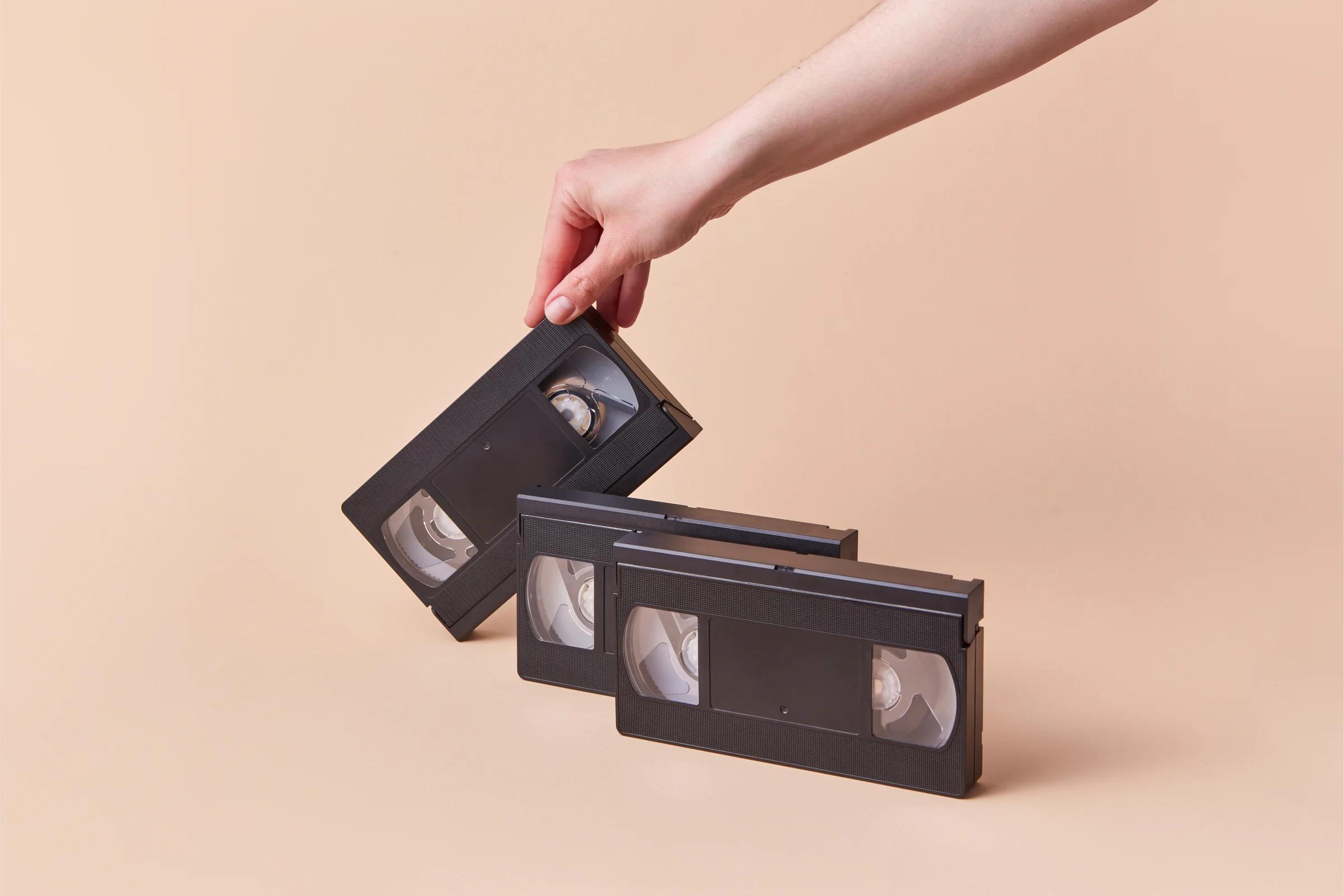
- Big black cassettes about the size of a paperback: VHS, or occasionally Betamax, which is slightly smaller and says Beta on the shell. These hold recordings off the television, the videographer's wedding copy, and footage from the full-size camcorders of the 1980s.
- Small cassettes from a camcorder, in three sizes: VHS-C, the chunkiest of the three and marked VHS-C or Compact VHS on the shell; the 8mm family, about the size of an audio cassette; and MiniDV, small enough to sit in a palm. These hold the footage families filmed themselves.
- Reels of film in square cardboard or plastic boxes, 3 inches across and up, with the film itself visible on the spool. These are cine films, usually from the 1950s to the 1980s.
- Audio cassettes, the music tape shape, often with handwritten inlay cards, and sometimes open reels of brown tape on a plastic or metal spool with no box around the tape.
- Photographs, slides and negatives: prints in envelopes, mounted slides in boxes or carousels, strips of negatives in paper sleeves.
Once the piles exist the box stops being overwhelming, because each pile has a known route. The VHS route is explained in our plain guide to what VHS is, which is also the place to check whether a big cassette is really VHS or something rarer.
Step two: identify the small tapes and the reels
The camcorder pile is where labels mislead most, because the three 8mm formats share a shell and families reused tapes between cameras. Look at the printed markings on the cassette rather than the handwritten ones. Video8, Hi8 and Digital8 look identical from the outside and not every deck plays all three, so the camcorder tapes guide walks through all five small formats with what each one needs.
Cine reels are simpler than they look. Most home cine reels in Britain are Super 8 or Standard 8, both on film 8mm wide. Standard 8 has larger sprocket holes sitting on the line between frames; Super 8 has smaller holes sitting beside the middle of each frame. We scan both, picture only, frame by frame. Two other gauges turn up in family boxes and are not something we handle. 9.5mm is only a little wider and has a single row of holes down the centre of the film between the frames. 16mm is twice the width and was used by schools and clubs rather than families. The cine film types guide has photographs for telling them apart.
Audio tapes need no identification beyond cassette or reel. The open reels are the ones to be careful with, because some of them are sixty years old and the tape can be brittle or sticky. Leave them on their spools. What is on old reel-to-reel tapes and how they are transferred has its own guide.
Step three: find the ones at risk
This is the step that decides the order. Go through each pile looking for warning signs, using your eyes and your nose and nothing that plays anything.
White or grey speckling visible through the window of a video tape is mould. Put that tape in its own bag away from the others, and do not play it. It is treatable, and spotting and dealing with mouldy VHS tapes explains what happens to it at the lab, but it can spread to tapes stored with it.
A sharp vinegar smell from a cine box is the film base breaking down. The film is still scannable but the clock is running, and that reel should be the first thing you send. Reels found in a loft have usually had the worst storage in the house, and what to do with cine film found in a loft covers how to handle them until they are sent.
Shiny or tacky looking tape on an open reel, or a reel that squealed the last time anyone played it, is sticky shed: the binder holding the oxide has absorbed moisture and turned gummy. Playing it in that state sheds the recording onto the heads. The lab tests for it and, where needed, bakes the tape at a controlled temperature to stabilise it before transfer.
Photographs and slides rarely fail outright, but they are not safe either. Colour prints from the 1970s and 1980s are losing their colour steadily, negatives curl and stick to their sleeves, and slides grow fungal spots in a damp wallet. Scanning stops the loss at whatever point it has reached, and the photo scanning guide explains why the scanning resolution matters.
Step four: decide what goes first
If budget or time means the box goes in stages, the order is simple. First, anything showing the warning signs above. Second, anything that only exists once: camcorder footage, cine film, home audio recordings, the wedding. Third, the oldest material, because it has had the longest to decay. Last, or not at all, recordings of television programmes and commercial films, which exist elsewhere and were never unique.
A wedding tape usually jumps the queue on its own merits, because it is often the most played tape in the house and shows the wear. Getting a wedding video onto a file that will last has its own guide, including what to expect from a videographer's copy.
What not to do with old home movies before you send them
Do not play anything to see what is on it. A second hand VCR from a car boot sale, a camcorder that has sat in a bag for twenty years, or a projector with a hot lamp and a perished belt can each destroy in a minute what has survived for decades. The curiosity is natural. The lab can satisfy it with far less risk, on serviced machines, with the tape inspected first.
Do not clean anything with household products, and do not try to rewind a tape by hand or unwind film to look at it. Keep things in the cases they came in, keep the labels and any notes with them, and write down anything you know about who filmed what and when. A note saying Mum thinks this is Cornwall 1978 is worth more than it sounds once the footage is a file and nobody can remember.
Sending the whole box of home movies to digital
Everything can go in one order. The calculator takes each item type separately: VHS and camcorder tapes at £12 each, Betamax at £25, cine reels by spool size from £12, audio cassettes at £12, open reels at £35, and prints, slides and negatives by the piece. A USB drive is £10 and cloud delivery £5, and you pay once at checkout. The paid order includes a reinforced Media Box and a prepaid tracked return label, so the box travels to you, your media travels to us, and the originals come home with the files. Each stage of that trip, and the emails you get along the way, is described in what happens after you order.
Pack by pile, with the fragile things in the middle and nothing loose. Our guide to packing tapes and reels for the post takes two minutes and prevents most of the problems we see.
What comes back is the box you sent plus a USB drive or a link, with a file for every tape, reel, recording, print and slide in it. The audio side is the one most people forget they have, and what can be recovered from old cassette tapes is worth reading before you decide the shoebox of cassettes does not matter.
Sorting the box takes an afternoon. Sending it takes an order and a walk to the post office. The full list of formats we take is on our services page, with the calculator alongside it.
Frequently Asked Questions
No. Sort what you can by the shapes described in this guide and make your best guess on the calculator. Every item is checked and logged when it arrives at the lab, and each tape is priced by what it actually is. If a cine reel turns out to be a gauge we do not transfer, we let you know and return it untouched without charging for it.
Yes, and it is the better way to do it. Video tapes, cine reels, audio cassettes, photographs and slides can all go in one Media Box, with secure tracked 3-way shipping and one set of files coming back together.
Start with anything that only exists once and is already showing damage: a mouldy tape, a cine reel that smells of vinegar, an open reel with tacky tape. Then the oldest recordings, and the ones with people who are no longer here. Recordings of television programmes and commercial films can wait or be left out.
An MP4 file for each video tape or cine reel, WAV and MP3 files for each audio tape, and high resolution image files for each photograph or slide, on a USB drive, by cloud link or both. The originals come home in the same box.
VHS and all the small camcorder tapes are £12 each, and Betamax is £25. Cine reels are priced by spool size, starting at £12 for a 3 inch reel. Audio cassettes are £12 and open reels £35. Prints are 50p each, slides 75p and negatives £1 per frame. A USB drive is £10 and cloud delivery £5. The calculator totals it as you add items, and you pay once at checkout.