Loading…

Loading…
Frame-by-frame scanning with colour correction and dust removal, tracked postage
£7.80 each on orders of 20+ reels
Rated 5.0 on Trustpilot & Google
Loading calculator…
Add your items for an instant price.
Choose one or both, set a quantity for each.
Bigger orders need larger USB drives and more cloud storage, so these prices step up with your order size.
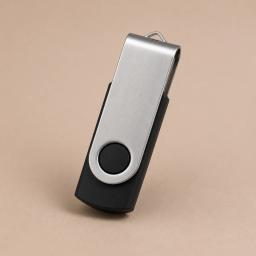
Reliable USB drive for your digital memories
£10.00 up to 9 items · £15.00 from 10 · £20.00 from 20 items

Secure cloud storage with easy sharing
£5.00 up to 9 items · £10.00 from 10 · £15.00 from 20 items
Add more to unlock bulk savings
Add items to see your box total.
We post you a reinforced Media Box with secure 3-way tracked shipping and a prepaid return label.
Your memories are in safe hands. Four simple steps take them from your door to digital.
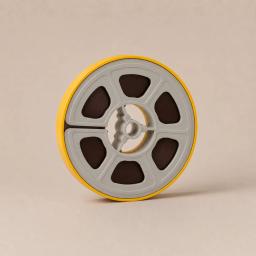
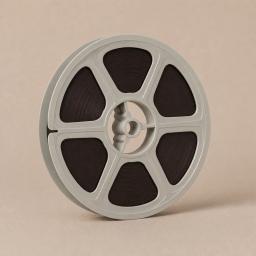
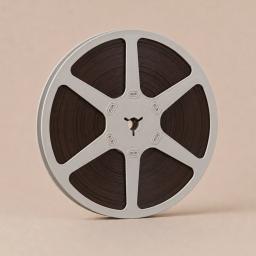
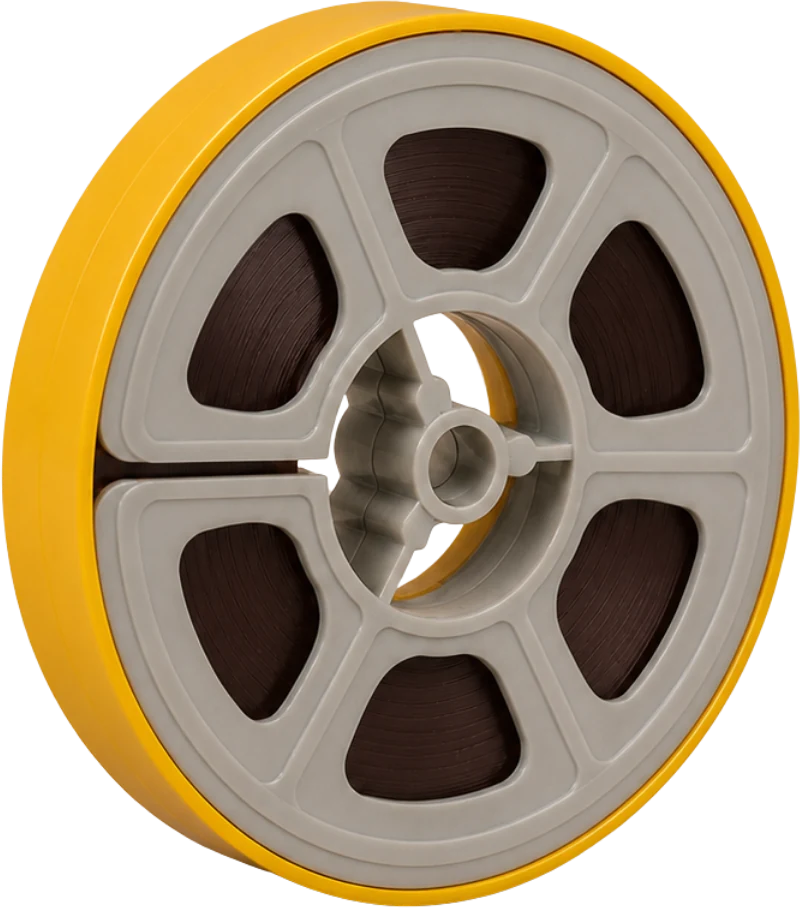
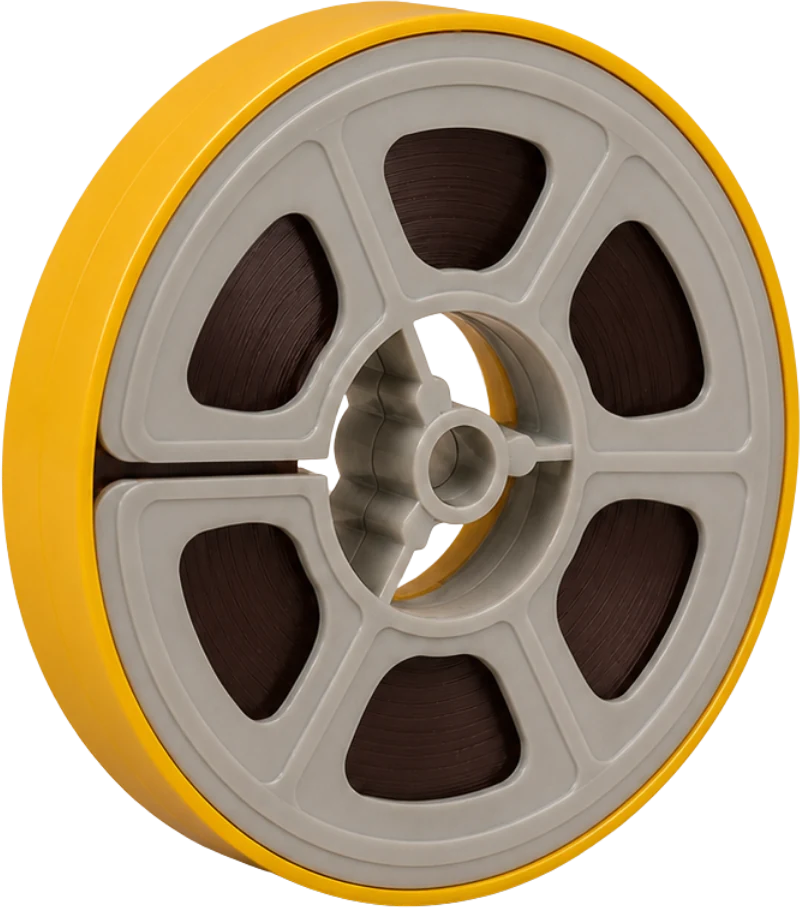
A 3-inch reel is the smallest standard size for cine film and typically holds around 50 feet of footage. At the standard Super 8 projection speed of 18 frames per second, that gives you roughly three to four minutes of film. These small reels were often what came back from the chemist after processing: a single holiday, a birthday party, a baby's first steps, captured in one short, continuous take.
The film on these reels is usually Super 8 or Standard 8 (Regular 8). The reel size refers to the spool, not the film gauge. If you are unsure which type you have, look at the perforations along the edge of the film: Super 8 has small, closely spaced holes on one side, while Standard 8 has larger holes on both sides. If your film is noticeably wider (16mm) or has a single row of holes running down the centre between the frames (9.5mm), those are gauges we do not currently digitise, so please leave them out of your Media Box.
Small reels tend to get handled more than large ones: pulled out of boxes, threaded onto projectors, rewound by hand. This handling causes scratches, fingerprints, and edge damage over time. The film stock itself is also degrading chemically: colour dyes fade (particularly cyan and yellow, leaving a pink or magenta cast), and acetate-based film can develop vinegar syndrome, where the base material shrinks and becomes brittle.
We scan each frame individually as a high-resolution still image, then assemble the sequence into a smooth digital video file. This frame-by-frame approach eliminates the flicker and hotspot problems of real-time projection-based transfers, and produces significantly sharper results. Colour correction is applied to compensate for fading, and the final file is stabilised digitally to remove any gate weave.
Drag the handle to see how footage leaves our lab - colour revived, detail recovered, ready to watch on any screen.
Original tape on the left · your digital transfer on the right
“Emotional reunion”
In just 9 days from first contact I was reunited with my late husband after 28 years. He had made a video when he was told that he had terminal cancer, in it he left memories and advice to our 4 children. He was a strong and brave man. I had excellent communication for each step along the way, my questions were answered and explained.
“Fantastic company great job and very good price”
Thoroughly researched all options before handing over my old but very precious tapes. Rest assured the price was very reasonable and the service was amazing. I received a progress report on how long the tapes required to be transferred to a digital format and also how the quality was being enhanced too. I received the data via the cloud which was super easy to access and download to my computer. I am so happy with this company and will be recommending them to all my friends! Thank you so much Sam and the team.
“Highly recommended.”
I was very pleased with the service I received from Digital Legacy. Kept up to date at every step of the process and the quality of the digital copies is as good as the original tapes, Very competitive pricing too!
“Fantastic service”
Fantastic service. I can not recommend enough. It was so amazing to watch our wedding video again and see and hear people no longer with us. Digital Legacy are fantastic - thanks guys
“A superb experience”
Having our most precious archive of VHS memories digitised by Digital Legacy was a superb experience. Everything, from the first interaction on the website to ordering and receiving the digitised videos was seamless, immensely reassuring and very professionally done. It’s obviously a little concerning to send off the only copies you have of your memories but the smart pre-packaging sent worked perfectly and the simplicity of accounting for each tape and labelling each before sending off was helpful. The quality of the digitised files is superb. I have more to digitise - video, stills and audio and will feel absolutely secure using Digital Legacy for all of it!
“Would definitely recommend!”
Really happy with this service. Fast and efficient and extremely pleased with the final product. Thank you 😊
Read more verified reviews on TrustpilotGoogle
No, you can send them in the tins. We will open and inspect each reel in the lab. Keeping them in the original tins actually provides good protection during shipping.
Look at the perforations along the edge of the film. Super 8 has small, closely spaced holes on one side of the film. Standard 8 has larger holes on both sides. If you cannot tell, do not worry. Send them to us and we will identify the gauge before scanning.
Some of the most treasured family footage we see is on 3-inch reels: a baby's first steps, a wedding exit, a grandparent waving at the camera. Three minutes of irreplaceable footage is worth preserving, and at this reel size the cost is modest.
We number each reel in the order received and name the digital files to match. If you want to add your own labels before sending, sticky notes or small stickers work well.
Yes. Black and white film is actually more chemically stable than colour and often scans beautifully even after 50 or 60 years. We adjust the scanning settings to bring out the full tonal range.
No, send it however you find it. We inspect and prepare every reel before scanning, including rewinding where needed.
Still have questions? Get in touch and we will be happy to help.
From the guides
Written by the people who do the transfers: what it costs, what you get back, and what to check before anything goes in the post.
Your family cine reels could be any of four common formats. Here is how to tell them apart, and why that matters before anyone tries to project or digitise them.
Read the guideBoth formats are 8mm wide, but they are not the same. Here is how to identify Super 8 and Standard 8 cine film before sending precious family reels for digitisation.
Read the guideNot all cine film transfers are equal. Here is why true frame-by-frame scanning is the safer, sharper and more faithful way to digitise old family reels.
Read the guideLoft storage is rarely kind to cine film, but the footage may still be recoverable. Here is how to handle old reels safely before digitisation.
Read the guideA small cine reel may hold only a few minutes of family footage, while a larger reel can hold half an hour or more. Here is how to estimate running time before digitisation.
Read the guideA vinegar smell from old cine film is not just an odd storage odour. It can be a warning sign of acetate film decay, and the sooner it is dealt with, the better the chance of saving the footage.
Read the guideQuestions about your collection? Reach us whichever way suits you. We usually reply within a few hours.
+44 7757 763 496
Message or call us in the app
+44 7757 763 496
Tap to call from your phone
admin@digital-legacy.me
Best for detailed questions
Unit 3, St Saviours Yard, St Saviours Ln
Norwich, Norfolk NR3 1GQ
Professional digitisation lab
Fill out the form below and we'll get back to you within 24 hours.