Grounded in how we work
Our guides come from real digitisation work in our Norwich lab, on the same equipment, turnaround and pricing as our service, and we refresh them when those change. Spotted an error? Tell us.
There is usually a very ordinary moment behind this search. You find a tape marked “Christmas 1994” or “Wedding”, realise there is no machine left in the house to play it, and start typing where to buy a VHS player. In 2026 that is not a simple shopping question, because nobody has made a VCR for a decade. Every machine for sale is second-hand, with an unknown history and parts that are no longer produced. This guide covers where UK buyers still find one, roughly what to pay, what to check before paying, and when to skip the deck altogether.
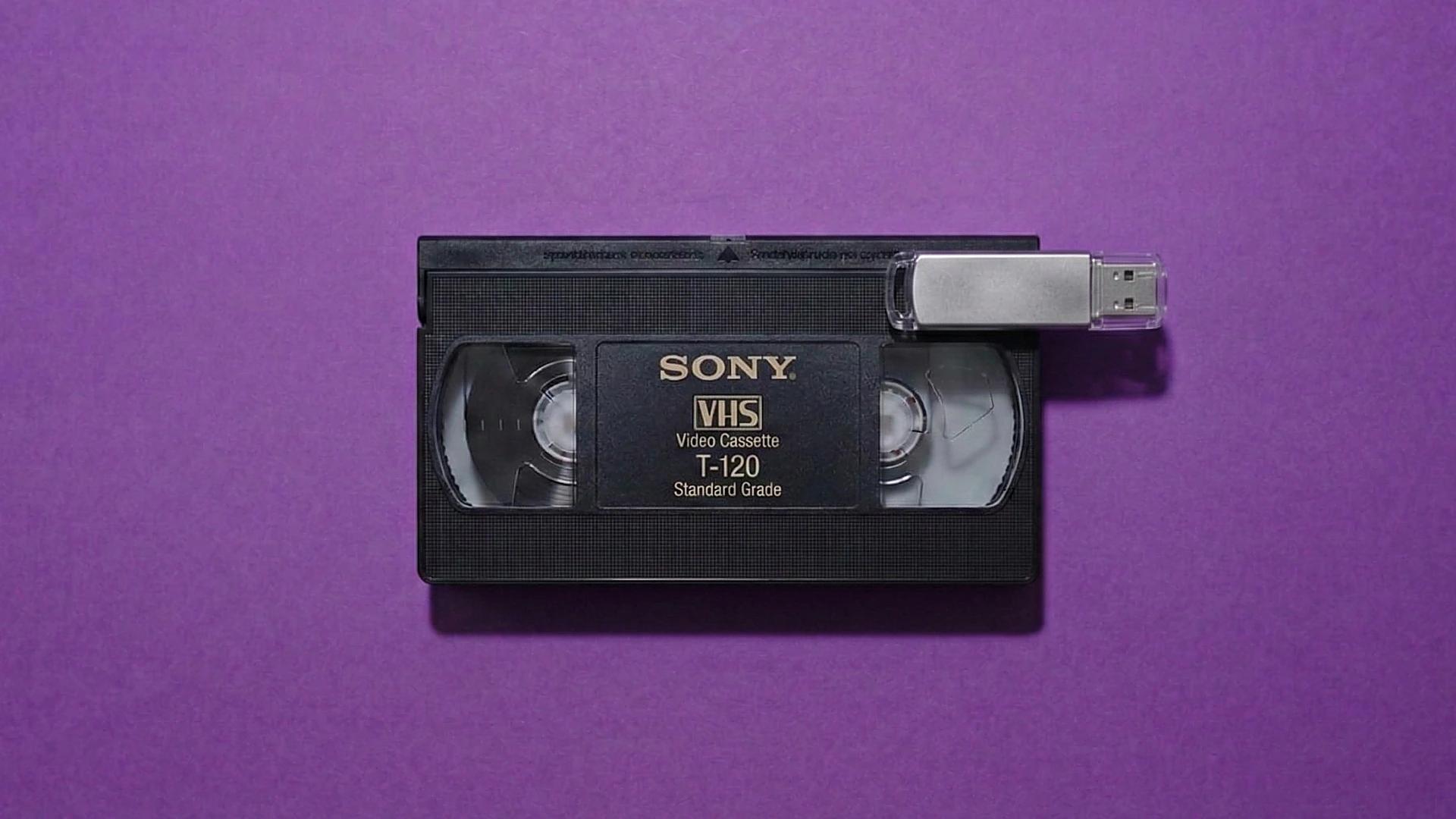
If the goal is simply to watch one or two family tapes, buying a VCR can still be done, but it is rarely the neat solution people hope for. The machine itself is only part of the problem. It also has to handle ageing magnetic tape safely, produce a stable picture, and keep going long enough to play or capture the footage without damaging it. That is why many households now skip the deck-hunting stage entirely and go straight to VHS to digital transfer instead.
Why are VHS players so hard to find now?
The short answer is that no one is making new ones. Funai, the last company still building VCRs, stopped in 2016, so every machine for sale in the UK today is used and relies on parts that nobody manufactures any more. The longer story of how the format rose and fell is told in our guide to the VHS format.
That changes what you are buying. There are no new models with warranties and spare parts, only surviving machines with unknown mileage. A VCR can power on and eject a cassette while still having worn heads, tired belts or dried-out capacitors. Its tape path may be misaligned just enough to put an irreplaceable recording at risk.
Where to buy a VHS player in the UK in 2026
The busiest market is still eBay UK. At the time of writing, a basic used deck tends to list at somewhere around £20 to £50. A cleaner “tested working” machine sits at perhaps £50 to £100, and serviced or S-VHS decks go for well above that. Treat those as a rough guide rather than a price list, because listings move week to week. eBay is the easiest place to start, but not necessarily the safest place to trust with an important tape.
Gumtree remains a live source too, especially for local collection. Machines do still turn up there regularly, and prices can be attractive, but the condition varies enormously. The same is true of Facebook Marketplace, where local listings can sometimes be cheaper but usually come with less structure and less reassurance than a formal retailer.
If you want something closer to a serviced unit, specialist vintage electronics sellers and occasional refurbishers can still be found online. These machines tend to cost more, but that higher price usually reflects the fact that someone has at least inspected, cleaned, or tested the deck more carefully than a casual private seller.
What does “tested and working” mean on a VCR listing?
This is the part many buyers underestimate. A listing that says tested and working often means only that the seller inserted a tape, saw a picture, and considered the job done. It does not necessarily mean the machine has been serviced, calibrated, cleaned properly, or stress-tested on a long family recording.
That distinction matters because playback quality and playback safety are not the same thing. A machine can appear to “work” while still giving you a noisy picture, unstable tracking, muffled hi-fi audio, or transport wear that only shows up twenty minutes into a tape. If the recording matters, it is worth thinking in terms of safe playback, not just successful playback. Muffled or missing audio in particular has several causes, covered in why a VHS tape plays with no sound.
What to check before buying a second-hand VCR
The best second-hand buy is rarely the cheapest one. It is the one with the clearest evidence. Ask whether the machine plays, rewinds, fast-forwards and ejects without hesitation, and whether the outputs have been tested on a television. Ask for the remote too, since many menus cannot be reached without it. For family tapes, it is also worth favouring sellers who can show the deck playing a tape on video rather than simply writing “powers on”. A deck that jams on its first outing is common enough that it is worth knowing how to get a stuck tape out safely before it happens.
It also helps to be honest about what you want the machine for. A retro setup for regular viewing on a CRT television is a fair reason to buy one. Protecting home movies is a different job, and the deck is only half of it. The condition of the tape path and transport matters before any irreplaceable cassette goes inside. The age of the tape matters just as much, and how far a VHS tape has already deteriorated is not something a seller can tell you.
When does buying a VCR stop making sense?
For many households the real question is not where to buy a VHS player but whether buying one is worth it at all.
If you buy a VCR, then discover the picture is unstable, the machine needs cleaning, or it starts chewing tape, you are still no closer to a secure copy of the footage. If you then decide to capture the tapes at home, the costs rise again because you still need additional hardware, software, time, and patience. VHS capture also happens in real time, which means a two-hour tape takes two hours to digitise before any trimming, checking, or troubleshooting begins. We break those numbers down in what VHS to digital really costs in the UK.
That is why professional transfer often makes more sense when the recordings matter. At that point you are not paying for a machine that can play VHS. You are paying for inspection before playback, playback on a maintained deck, and a digital file that no longer depends on a fragile original. If the deck is the sticking point, there is a separate guide to getting VHS digitised without buying a VCR.
If you do end up with a deck, connecting it is the next hurdle, because most recent televisions have no SCART socket at all. There is a step by step guide to how to play VHS tapes on a modern set.
What is the alternative to buying a VHS player?
The alternative is to send the tapes to a lab that already owns the right decks. At Digital Legacy, VHS transfer is £12 per tape whatever its length. You build the quote on our online calculator and choose USB or cloud delivery for the finished MP4 files. The full details are on the VHS to digital service page.
You pay once at checkout and we send out a reinforced Media Box with protective packing and a prepaid tracked return label, so the tapes travel by secure tracked 3-way shipping. If you would rather use your own packaging and postage, you can.
When the tapes arrive we log and photograph them, inspect each one before playback, clean and repair where needed, then capture on professional decks and return the originals by tracked delivery. Turnaround is typically 2 to 4 weeks from when we receive your media. Each of those steps is described in what happens to your tapes in the lab.
What to do next
If you want a VCR for the fun of it, search eBay, Gumtree and Facebook Marketplace and ask the seller for a video of a tape playing before you pay. If the tapes hold the only copy of a wedding or a childhood, count them, build a quote on our calculator and let us do the playback on decks we maintain ourselves. Either way, play nothing irreplaceable on a machine you have not seen working first. The full route from cupboard to digital file is laid out in our VHS to digital guide.
Frequently Asked Questions
Only if you want to watch tapes for the pleasure of it rather than to protect them. A second-hand VCR makes sense for a retro setup, but as a way of preserving family recordings it is a gamble: the deck may track poorly, chew the tape or fail after a few uses. If the footage is irreplaceable, having it transferred professionally is usually the safer spend.
A specialist refurbisher is the safest bet, because the deck has usually been opened, cleaned and had its belts checked rather than just switched on. Private listings on eBay, Gumtree and Facebook Marketplace are cheaper, but you are relying on the seller’s word, and the only tape it has played recently may be the one they tested it with.
Yes. A worn or badly maintained VCR can crease, stretch, chew, or snap old tape. That risk is higher with fragile cassettes that have been stored for years in lofts, garages, or damp cupboards. If the tape contains irreplaceable footage, it is usually safer to have it inspected and transferred on professional equipment rather than played in an unknown second-hand machine.