Loading…

Loading…
2400–3200 DPI with infrared scratch removal. 35mm, 120 and 110 formats
£0.65 each on orders of 20+ items
Rated 5.0 on Trustpilot & Google
Loading calculator…
Add your items for an instant price.
Choose one or both, set a quantity for each.
Bigger orders need larger USB drives and more cloud storage, so these prices step up with your order size.
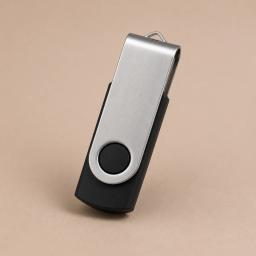
Reliable USB drive for your digital memories
£10.00 up to 9 items · £15.00 from 10 · £20.00 from 20 items

Secure cloud storage with easy sharing
£5.00 up to 9 items · £10.00 from 10 · £15.00 from 20 items
Add more to unlock bulk savings
Add items to see your box total.
We post you a reinforced Media Box with secure 3-way tracked shipping and a prepaid return label.
Your memories are in safe hands. Four simple steps take them from your door to digital.
Film negatives are, in many ways, the real treasure in a family's photographic archive. While prints fade, get handled, and deteriorate over the years, the negatives, tucked away in envelopes and forgotten, often retain far more detail and tonal range than the prints that were made from them. A good scan of a well-preserved negative will produce a sharper, richer image than scanning the corresponding print, because you are going back to the original source material.
Most people have 35mm negatives, which come in strips of four to six frames in paper or plastic sleeves. You may also have 120 (medium format) negatives, which are wider and produce larger images, or 110 format negatives from pocket cameras popular in the 1970s and 1980s. Colour negatives show the image in inverted and orange-masked form. They look nothing like the final picture until scanned and digitally inverted.
Negatives are susceptible to the same degradation as other photographic film: colour dye fading, base curl, fungal growth, and scratches from handling. The orange mask on colour negatives complicates scanning because it must be precisely subtracted during the inversion process. Cheap scanning software often gets this wrong, producing images with unnatural colour casts. Our professional film scanners handle this correctly, using calibrated profiles for different film stocks.
We scan negatives at high resolution using dedicated film scanners with infrared dust and scratch removal. Each frame is individually inverted, colour-corrected, and cropped. The result is a set of clean, properly balanced digital images that are often noticeably better than the original prints, particularly for negatives from the 1990s and 2000s where the prints have already started to fade.
“Emotional reunion”
In just 9 days from first contact I was reunited with my late husband after 28 years. He had made a video when he was told that he had terminal cancer, in it he left memories and advice to our 4 children. He was a strong and brave man. I had excellent communication for each step along the way, my questions were answered and explained.
“Fantastic company great job and very good price”
Thoroughly researched all options before handing over my old but very precious tapes. Rest assured the price was very reasonable and the service was amazing. I received a progress report on how long the tapes required to be transferred to a digital format and also how the quality was being enhanced too. I received the data via the cloud which was super easy to access and download to my computer. I am so happy with this company and will be recommending them to all my friends! Thank you so much Sam and the team.
“Highly recommended.”
I was very pleased with the service I received from Digital Legacy. Kept up to date at every step of the process and the quality of the digital copies is as good as the original tapes, Very competitive pricing too!
“Fantastic service”
Fantastic service. I can not recommend enough. It was so amazing to watch our wedding video again and see and hear people no longer with us. Digital Legacy are fantastic - thanks guys
“A superb experience”
Having our most precious archive of VHS memories digitised by Digital Legacy was a superb experience. Everything, from the first interaction on the website to ordering and receiving the digitised videos was seamless, immensely reassuring and very professionally done. It’s obviously a little concerning to send off the only copies you have of your memories but the smart pre-packaging sent worked perfectly and the simplicity of accounting for each tape and labelling each before sending off was helpful. The quality of the digitised files is superb. I have more to digitise - video, stills and audio and will feel absolutely secure using Digital Legacy for all of it!
“Would definitely recommend!”
Really happy with this service. Fast and efficient and extremely pleased with the final product. Thank you 😊
Read more verified reviews on TrustpilotGoogle
Usually, yes. We carefully separate negatives from their sleeves using archival techniques. Severely stuck negatives may lose a small amount of emulsion in the process, but in most cases we can extract them cleanly and scan them without issue.
Negatives contain far more detail and tonal range than the prints made from them. A high-resolution scan of a well-preserved negative will produce a sharper, richer image with better colour than scanning the corresponding print. If you have both, the negatives are almost always the better source.
Yes. All colour negatives have an orange mask built into the film base. This is normal and is precisely subtracted during the scanning and inversion process. The final digital image will show correct, natural colours.
Yes. Most negatives come to us in strips of four to six frames, exactly as they came back from the photo lab. We scan them strip by strip and deliver individual images.
Yes. We scan 120 format negatives at high resolution. The larger frame size means these negatives hold significantly more detail than 35mm, and the resulting scans are often stunning.
Yes. All original negatives are returned to you after the transfer. We pack them in archival-safe sleeves where needed and return them with your digital files.
Still have questions? Get in touch and we will be happy to help.
From the guides
Written by the people who do the transfers: what it costs, what you get back, and what to check before anything goes in the post.
Scratches, dust and marks on old negatives do not always mean the image is lost. Here is what can often be improved, what is permanent, and why the scan itself matters so much.
Read the guideThey are both small, transparent, and come in old boxes. But slides and negatives are different formats that need different scanning approaches.
Read the guideA practical guide to getting good digital copies of your printed photographs, slides, and negatives without damaging the originals.
Read the guideSlides are tiny originals, so resolution matters more than it does with ordinary prints. Here is how to choose the right scanning DPI without wasting time or storage.
Read the guideColour slides can shift dramatically over time, especially if they have been stored in warm or damp conditions. Here is why it happens, what can be corrected, and why scanning them now is often the safest choice.
Read the guideYou have pressed the button. Here is exactly what happens next, step by step, so there are no surprises.
Read the guideQuestions about your collection? Reach us whichever way suits you. We usually reply within a few hours.
+44 7757 763 496
Message or call us in the app
+44 7757 763 496
Tap to call from your phone
admin@digital-legacy.me
Best for detailed questions
Unit 3, St Saviours Yard, St Saviours Ln
Norwich, Norfolk NR3 1GQ
Professional digitisation lab
Fill out the form below and we'll get back to you within 24 hours.