Loading…

Loading…
Custom holders and glove handling, wet collodion and gelatin silver plates
£3.25 each on orders of 20+ items
Rated 5.0 on Trustpilot & Google
Loading calculator…
Add your items for an instant price.
Choose one or both, set a quantity for each.
Bigger orders need larger USB drives and more cloud storage, so these prices step up with your order size.
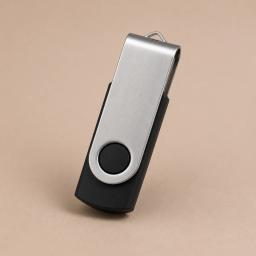
Reliable USB drive for your digital memories
£10.00 up to 9 items · £15.00 from 10 · £20.00 from 20 items
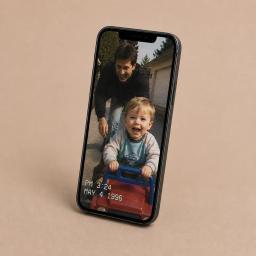
Secure cloud storage with easy sharing
£5.00 up to 9 items · £10.00 from 10 · £15.00 from 20 items
Add more to unlock bulk savings
Add items to see your box total.
We post you a reinforced Media Box with secure 3-way tracked shipping and a prepaid return label.
Your memories are in safe hands. Four simple steps take them from your door to digital.
Glass plate negatives are among the oldest photographic formats still found in private collections. They pre-date flexible film and were the standard photographic medium from the 1850s through to the 1920s, with some professional and scientific use continuing well into the mid-twentieth century. If you have glass negatives, they may contain portraits, landscapes, architectural records, or documentary images that are over a hundred years old.
Each plate is a sheet of glass coated with a light-sensitive emulsion, typically either wet collodion (very early, pre-1880s) or gelatin silver (1880s onwards). The glass provides a perfectly flat, dimensionally stable base, which means the images are often extraordinarily sharp and detailed compared to early film negatives. A well-preserved glass plate from the Victorian era can produce a digital scan with remarkable clarity.
The obvious challenge is fragility. Glass plates crack, chip, and shatter if dropped or stacked carelessly. The emulsion layer can also flake, lift, or develop silvering (a metallic sheen caused by chemical migration). Some plates have been stored for over a century in damp cellars or attics, and the glass itself may be warped, crazed, or bonded to its storage sleeve. Every plate needs to be assessed individually before handling.
We scan glass negatives on professional flatbed equipment with custom holders that support the plate evenly without applying pressure. Each scan is captured at high resolution, inverted from negative to positive, and adjusted for density and contrast. The resulting digital image often reveals detail that is invisible to the naked eye when looking at the plate: faces that were lost in shadow, inscriptions on buildings, textures in fabric. These scans frequently become the most treasured images in a family's entire archive.
“Emotional reunion”
In just 9 days from first contact I was reunited with my late husband after 28 years. He had made a video when he was told that he had terminal cancer, in it he left memories and advice to our 4 children. He was a strong and brave man. I had excellent communication for each step along the way, my questions were answered and explained.
“Fantastic company great job and very good price”
Thoroughly researched all options before handing over my old but very precious tapes. Rest assured the price was very reasonable and the service was amazing. I received a progress report on how long the tapes required to be transferred to a digital format and also how the quality was being enhanced too. I received the data via the cloud which was super easy to access and download to my computer. I am so happy with this company and will be recommending them to all my friends! Thank you so much Sam and the team.
“Highly recommended.”
I was very pleased with the service I received from Digital Legacy. Kept up to date at every step of the process and the quality of the digital copies is as good as the original tapes, Very competitive pricing too!
“Fantastic service”
Fantastic service. I can not recommend enough. It was so amazing to watch our wedding video again and see and hear people no longer with us. Digital Legacy are fantastic - thanks guys
“A superb experience”
Having our most precious archive of VHS memories digitised by Digital Legacy was a superb experience. Everything, from the first interaction on the website to ordering and receiving the digitised videos was seamless, immensely reassuring and very professionally done. It’s obviously a little concerning to send off the only copies you have of your memories but the smart pre-packaging sent worked perfectly and the simplicity of accounting for each tape and labelling each before sending off was helpful. The quality of the digitised files is superb. I have more to digitise - video, stills and audio and will feel absolutely secure using Digital Legacy for all of it!
“Would definitely recommend!”
Really happy with this service. Fast and efficient and extremely pleased with the final product. Thank you 😊
Read more verified reviews on TrustpilotGoogle
Yes, in most cases. We can scan cracked plates by carefully aligning the pieces on the scanner bed. The crack will be visible in the scan, but the image on either side is usually intact. For particularly important plates, we can digitally remove the crack line as part of an optional restoration service.
Often, they produce stunning images. Glass plates are dimensionally stable and the gelatin silver emulsion is remarkably durable when stored dry. Victorian-era plates frequently scan with extraordinary sharpness and detail, revealing faces, textures, and backgrounds that are invisible to the naked eye when looking at the dark plate.
Wrap each plate individually in acid-free tissue or bubble wrap, and separate plates with rigid card so they cannot touch or shift during transit. Pack them vertically, on edge, rather than flat, as this reduces the risk of cracking under pressure. Our Media Box includes protective materials, but glass plates benefit from extra padding.
We can often give a rough estimate based on the plate size, emulsion type, and photographic style. Wet collodion plates generally predate the 1880s, while gelatin silver plates are typically from the 1880s onwards. We will share any observations when we return your scans.
We handle all common plate sizes, from small quarter-plates (roughly 8×10cm) through to full-plates (roughly 16×21cm) and larger. If you have unusually large plates, let us know the dimensions before sending and we will confirm we can accommodate them.
Still have questions? Get in touch and we will be happy to help.
Questions about your collection? Reach us whichever way suits you. We usually reply within a few hours.
+44 7757 763 496
Message or call us in the app
+44 7757 763 496
Tap to call from your phone
admin@digital-legacy.me
Best for detailed questions
Unit 3, St Saviours Yard, St Saviours Ln
Norwich, Norfolk NR3 1GQ
Professional digitisation lab
Fill out the form below and we'll get back to you within 24 hours.